

Chivalry is Dead: Race for the Crown is a fantasy-themed chariot racing game from Naughty Jester Games that blends high-speed competition with chaotic combat, delivering a racing experience that is as much about survival and sabotage as it is about crossing the finish line. Likened by one of the original Kickstarter previewers as the racing equivalent of Blood Bowl, you go into Chivalry is Dead: Race for the Crown expecting chaos and usually getting it!
At its core, Chivalry is Dead: Race for the Crown is a game of spectacle. The premise is tongue-in-cheek: after years of war, the fantasy races of dwarves, goblins, kobolds, and humans decide to settle their differences in the most “civilized” way possible — with a chariot race where the winner takes the crown. Each player controls a team of two or three chariots depending on player count, with the game recommending at least six chariots on the track for maximum mayhem.
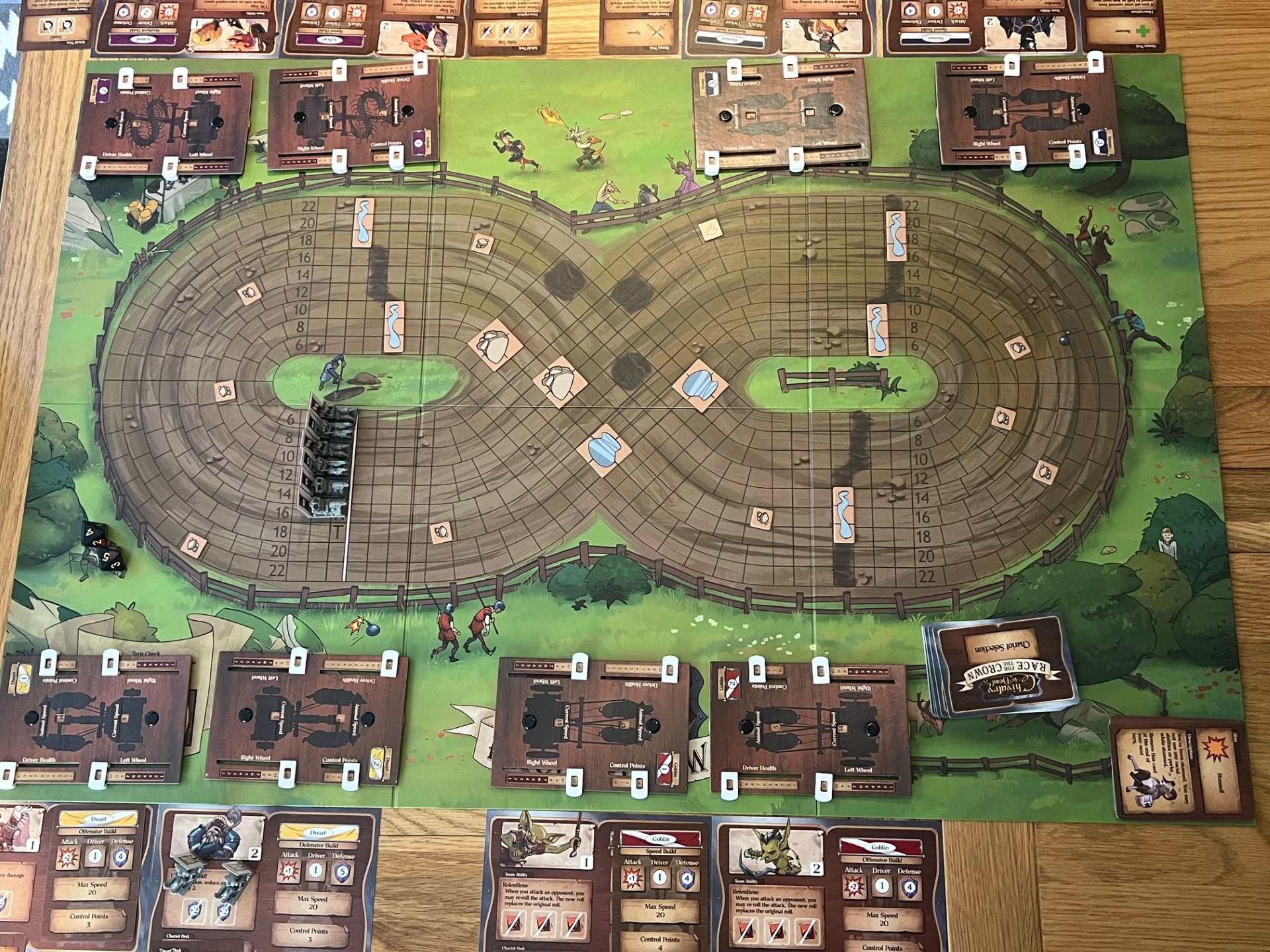
The objective of Chivalry is Dead: Race for the Crown is simple: complete one or two laps around the racetrack (as agreeD) with at least one of your chariots. In practice, however, victory often comes not from speed alone but from eliminating rivals along the way, and also (perhaps predominantly so) because the dice gods “will” it to be.
The game flow is structured around rounds, with each chariot taking a turn determined by a randomized selection deck. Each turn begins with a preparation phase where players adjust chariot speed, followed by movement and combat. Chariots can accelerate, brake, change lanes, and even charge forward by spending control points which are limited, and turns must be navigated at fixed, maximum speeds or else chariot wheels can be damaged (and ultimately the chariot itself can be destroyed.)

Combat is central to Chivalry is Dead: Race for the Crown’s identity. Players can ram opponents, attack different parts of the opposing chariots and use their race’s special abilities to lay traps or sabotage progress. Attacks are resolved with d8 dice rolls, modified by perks and control cards, and the risk of counterattacks adds tension. The result is a game where positioning matters, but so does timing your aggression.
What makes Chivalry is Dead: Race for the Crown stand out is its balance between chaos and strategy. On one hand, the random draw for turn order and dice-based combat inject unpredictability, ensuring no race feels scripted. On the other hand, players have access to control cards that refresh each lap, allowing them to mitigate chance and plan tactical moves. This interplay means that while luck can swing outcomes, skillful play and clever use of abilities often determine who survives the carnage. The game encourages players to adopt different strategies: some may push a single chariot toward victory while sacrificing others in combat, while others may spread risk across their team.

The track itself adds further complexity. Terrain tokens — rocks, water hazards, debris — are placed during setup to ensure no clear path exists. Negotiating corners requires careful speed management, and collisions are frequent. Thematically, the game evokes the cinematic chaos of movies like Ben Hur, with spikes, rams, and wheel-smashing attacks, but filtered through a fantasy lens where kobolds appear to be devious geniuses and dwarves retain their classically robust persona. The result is merry mayhem, particularly at the full player and chariot count where the board is absolutely packed.
In terms of accessibility, Chivalry is Dead is relatively straightforward to teach. The rules are clear albeit a bit verbose, with player boards and dual-dial chariot cards tracking speed, health, and control points. Setup is modular, allowing for one-or two-lap races depending on desired length, and player teams being highly customisable. A one-lap race is quick and chaotic, while two laps allow for more attrition and tactical play. The game’s tone is lighthearted, and this isn’t a game you should approach with too much seriousness.

Replayability is strong thanks to the variety of chariot builds (offensive, defensive, speed and resilient) and perks that customize abilities. Combined with the randomness of turn order and dice rolls, no two races play out the same way. That said, the game thrives most with larger player counts, where the density of chariots amplifies the chaos. With fewer players, the game risks feeling less dynamic, though the combat system ensures there’s always tension.
Chivalry is Dead: Race for the Crown succeeds because it embraces the inherent silliness of its premise while delivering a mechanically sound racing game. It avoids the slow calculation that bogs down some racing titles, instead prioritizing adrenaline, interaction, and laughter. For players who enjoy games like Thunder Alley or Heat: Pedal to the Metal but wish for more direct conflict, this offers a refreshing alternative.
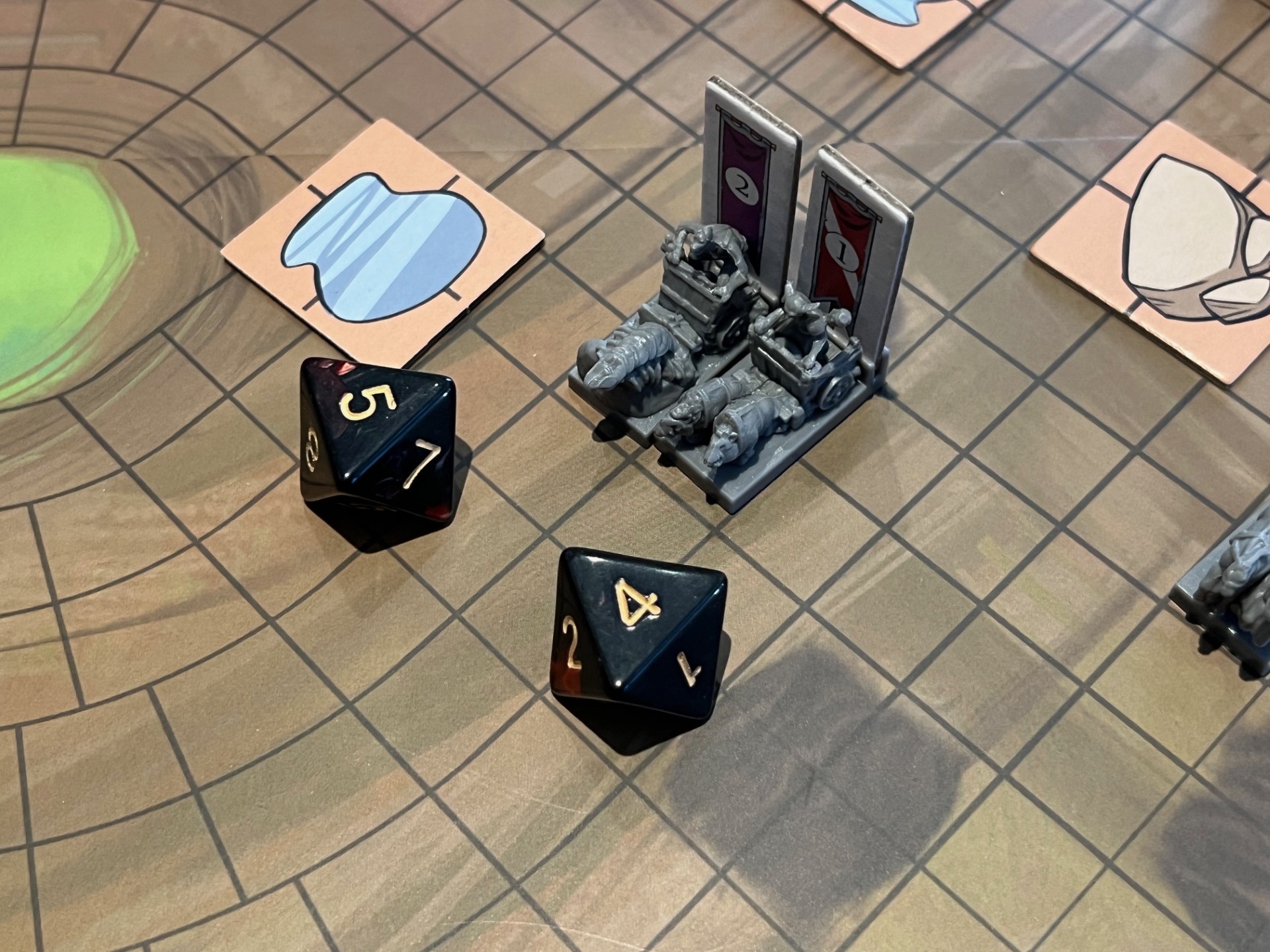
Chivalry is Dead: Race for the Crown is not a game of pure speed — it’s a game of survival, sabotage, and spectacle, and in that regard, it delivers exactly what its title promises. Fans of Thunder Road: Vendetta will certainly feel the similarities, but arguably, Chivalry is Dead: Race for the Crown is a little more complex and slightly less luck dependent. That’s a bit of a subjective opinion as there are still many random factors here, but Restoration Games effort feels so luck derived that the players are often just along for the ride.
Chivalry is Dead: Race for the Crown is chaotic, interactive, and often very, very entertaining. It’s a racing game where combat is as important as cornering, where traps and rams matter as much as acceleration, and where victory often comes from cunning rather than raw speed. For me, the joy of watching a rival’s chariot flip in spectacular fashion was just as satisfying as crossing the finish line — and that’s the kind of racing game I’ll happily return to.
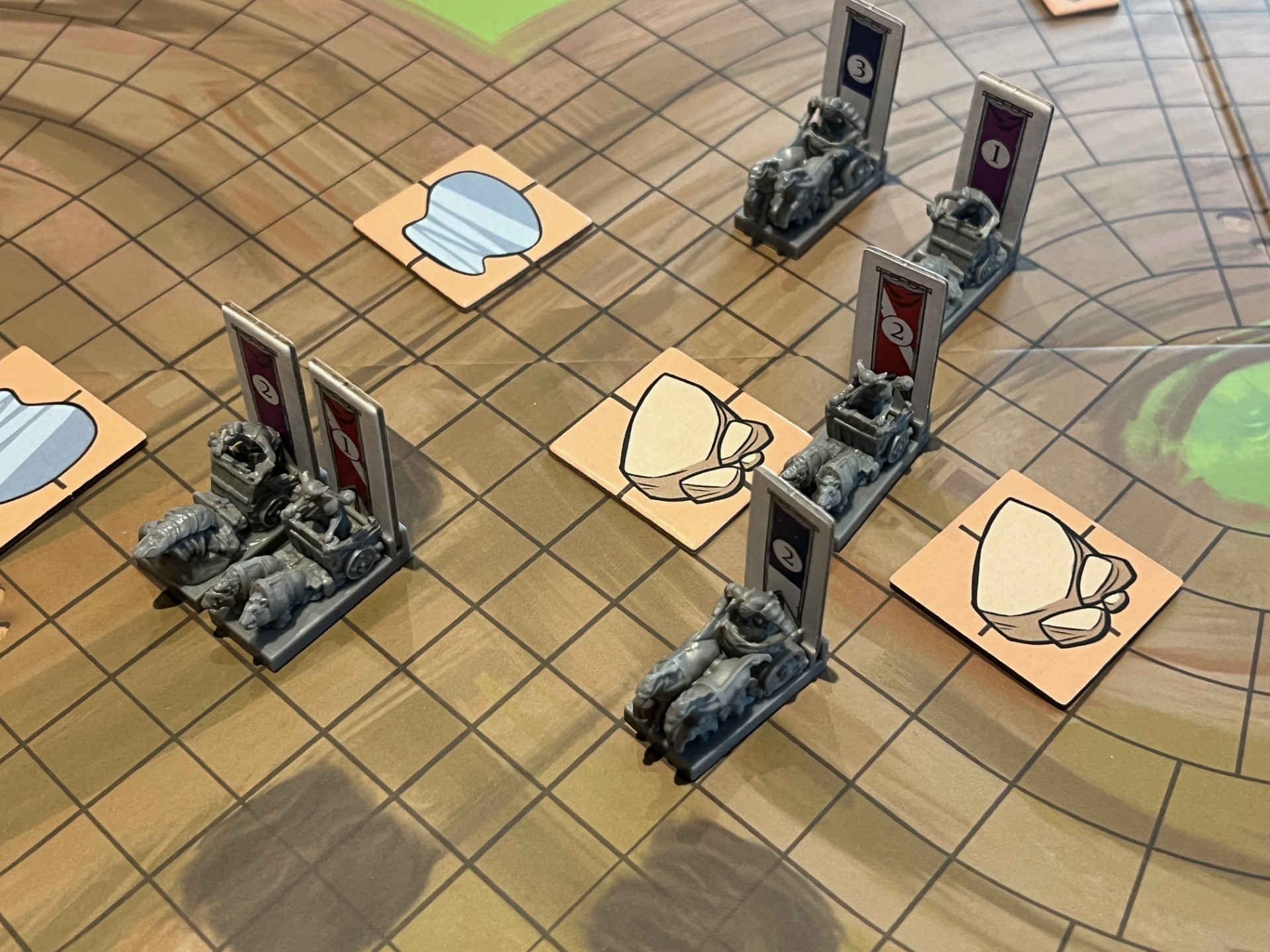
On the downside, those collisions and flips often involve layered dice rolls that won’t be to everyone’s taste, and of course with the possibility of player elimination, you need to know what you’re getting into. Some games of Chivalry is Dead: Race for the Crown can feel as if they are over before they’ve really begun, but even a two lap race isn’t especially long if you’re the unlucky one who is eliminated a few rounds before the end.
You can find out more about Chivalry is Dead: Race for the Crown on its website.
