

Following the misfires that led to the famous managerial series missing a beat for the first time ever in 2024, Football Manager 2026 represents a bold leap forward for the series, introducing a new game engine, the massive inclusion of women’s football, an overhauled matchday presentation, smarter AI, and a host of quality-of-life improvements that make it the most immersive and tactically rich entry to date.
After a year-long hiatus following the cancellation of FM25, expectations for Football Manager 2026 were sky-high. Thankfully, Sports Interactive has delivered a game that feels both familiar and refreshingly new in almost every area. Built on the Unity engine for the first time, FM26 is more than just a visual upgrade; it’s a systemic rework that touches nearly every aspect of the experience, from matchday visuals to backroom dynamics. Whether you’re a veteran tactician or a first-time gaffer, Football Manager 2026 rewards deep thinking, long-term planning, and emotional investment like almost no other game.
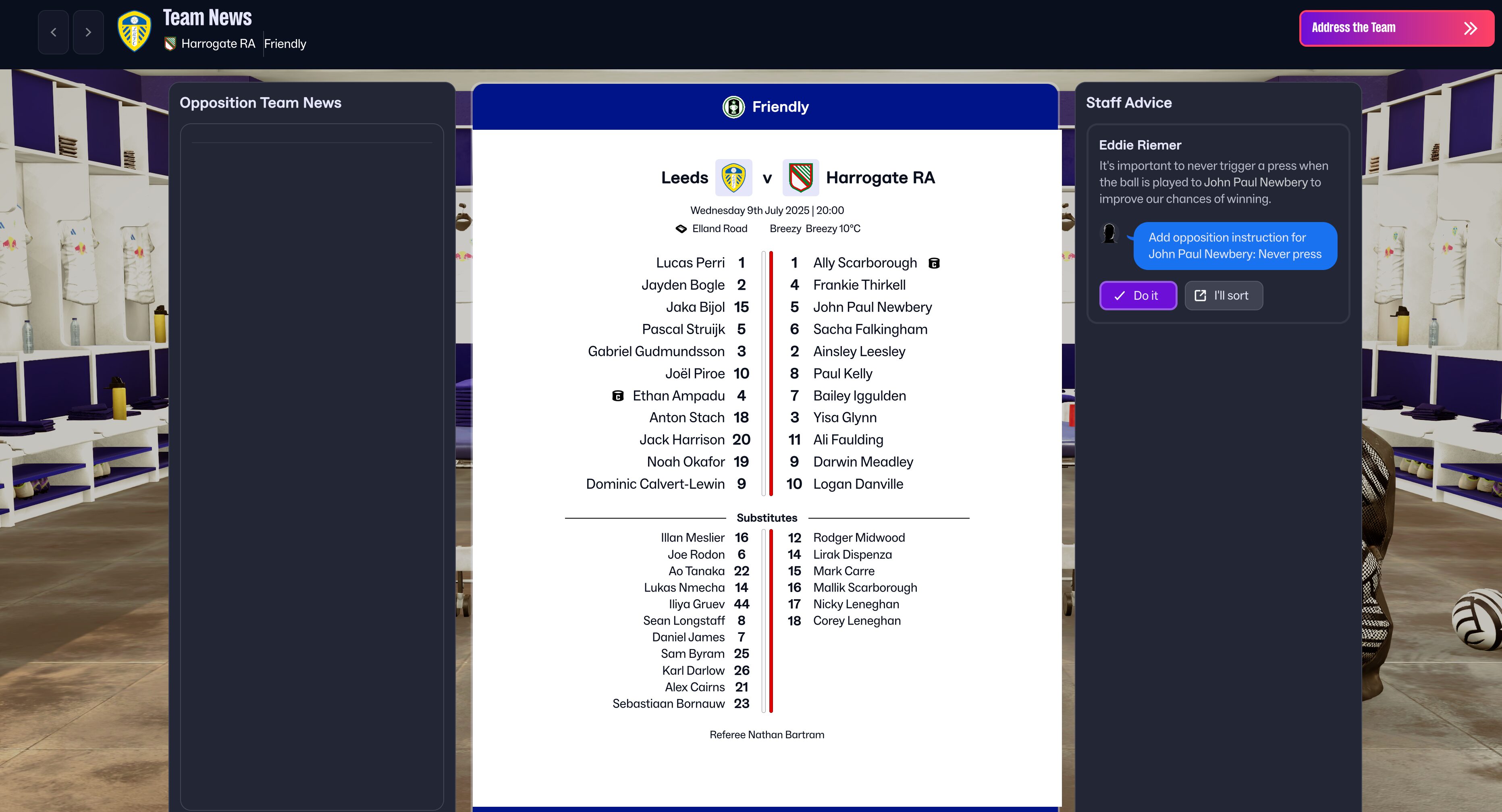
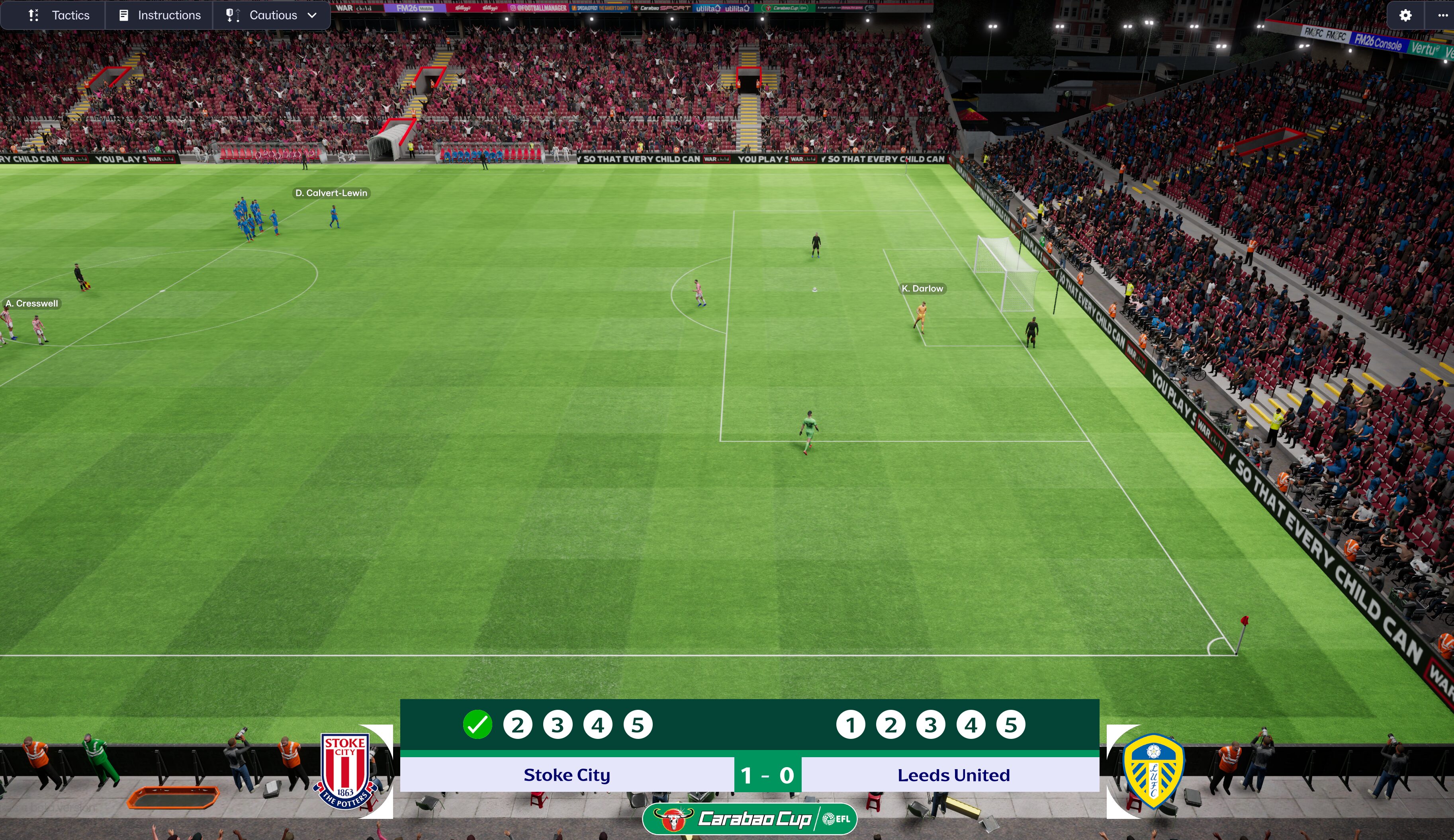
The most headline-grabbing technical change in Football Manager 2026 is that aforementioned switch to the Unity engine. This move has allowed for a complete overhaul of the matchday experience, with full 3D stadiums, dynamic lighting, and ultrawide support that finally brings the visual presentation closer to the modern football broadcast standard. Player animations have been rebuilt from the ground up, with more fluid movement, realistic collisions, and contextual reactions. You’ll now see players gesturing in frustration after a missed chance, celebrating with teammates in more lifelike ways, and even arguing with referees over contentious decisions.
The new engine also enables dynamic weather effects — rain now visibly slicks the pitch, affecting ball movement and player footing, while snow accumulates over time, subtly altering visibility and pace. I have always trusted SI to include these features in the matchday processing, so I know that these things aren’t just cosmetic flourishes, but it’s great that the match engine now provides more visual cues for managers to adapt formations and instructions based on game conditions.
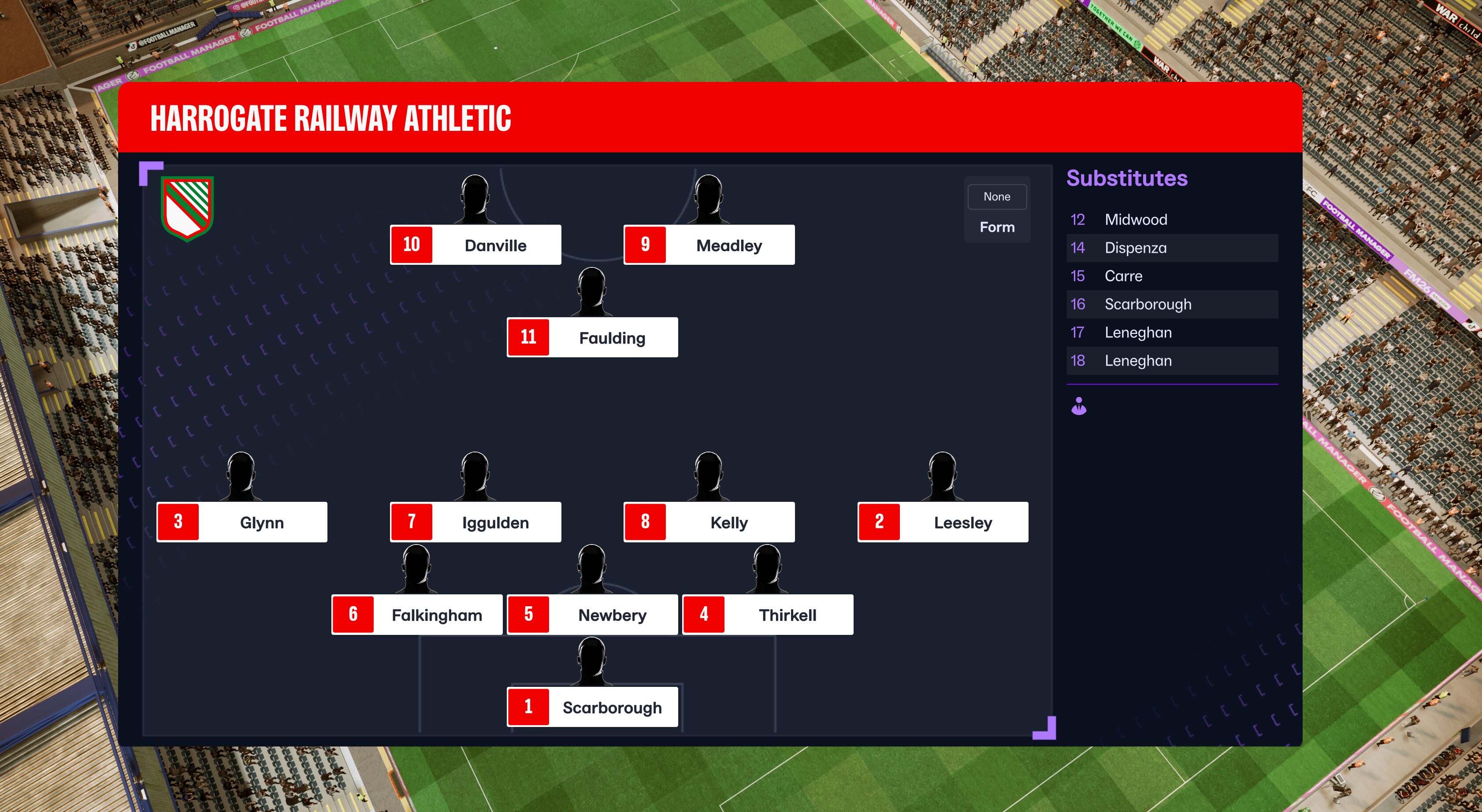
According to the press material, Football Manager 2026 introduces a significant upgrade to both player and managerial AI. SI claims that opposing managers will now adapt more intelligently over the course of a match and season — although this is hard to measure from my perspective. I will say that it “feels” that if you rely too heavily on a particular tactic, the AI will adjust — pressing higher, doubling up on key players and exploiting your defensive weaknesses. This should hopefully make longer careers more dynamic; forcing you to evolve rather than rely on a single tried-and-tested system as I often have done in past iterations.
Player decision-making has certainly improved. Forwards now make more nuanced runs, midfielders better understand space and tempo, and defenders are more aware of offside traps and aerial threats. The new tactical familiarity system tracks not just formation knowledge, but also player comfort with specific roles, instructions, and in-game scenarios. This means that even within a familiar shape, players may struggle if asked to perform unfamiliar tasks — adding a layer of realism and challenge.
One big change here is the introduction of what is essentially two parallel formations — one for when the team has the ball (in possession) and one for when the opposition does (out of possession). For my beloved Leeds United, this meant I could adopt Daniel Farke’s high wing backs and high level of possession in the opposing half when in possession, whilst moving quickly to a more conservative defensive press out of possession. This feels like a big, logical change that I have wanted for — believe it or not — about twenty years of playing the game.
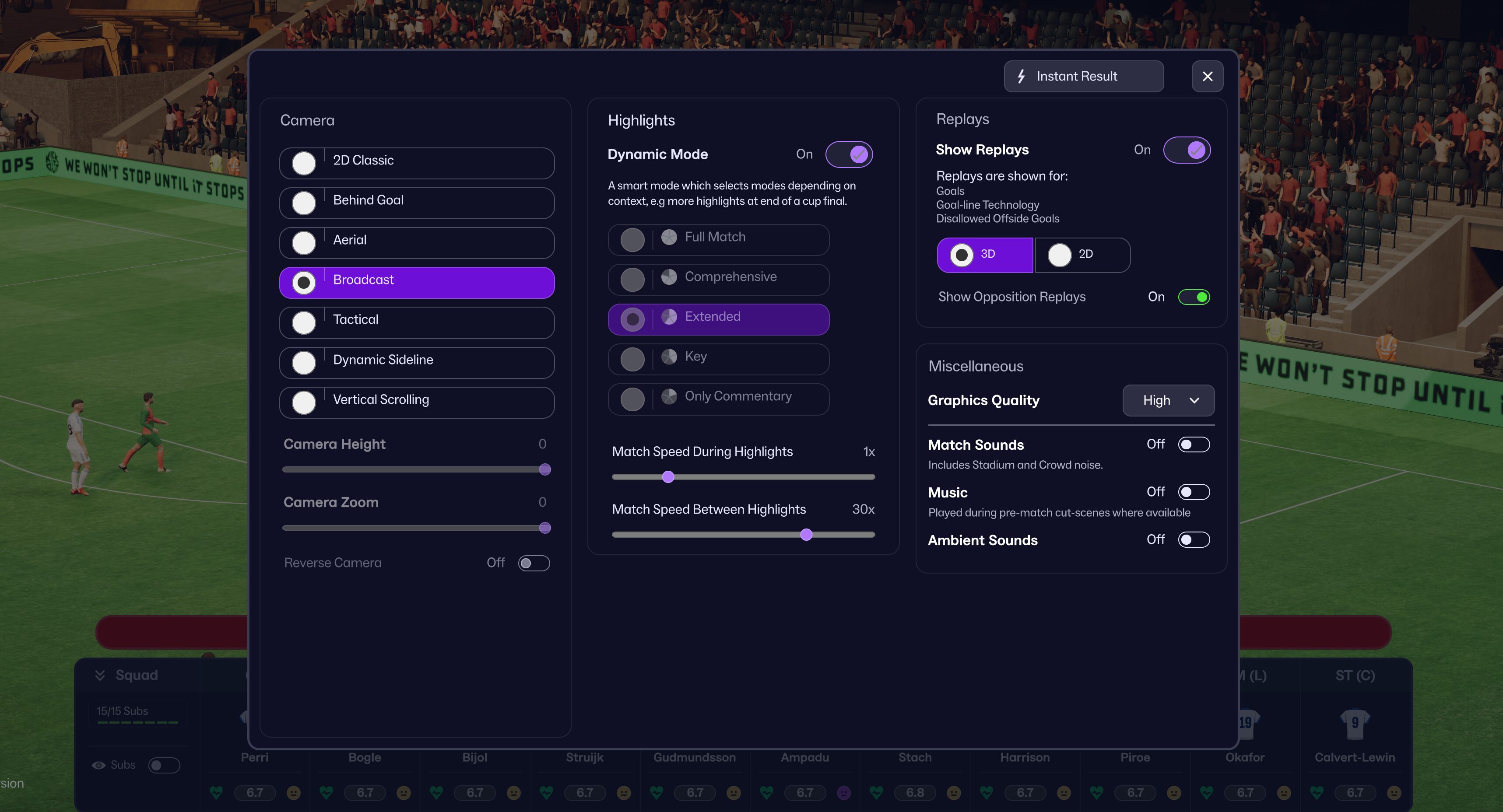
Returning to the in game experience, it’s good to note that the engine isn’t just prettier — it’s more functional too. The new Broadcast Cam offers a TV-style perspective that makes watching games more engaging, while the Analyst Cam provides a top-down tactical view ideal for dissecting shape and movement. Replays now include multiple angles, slow-motion, and even VAR-style overlays for controversial decisions.
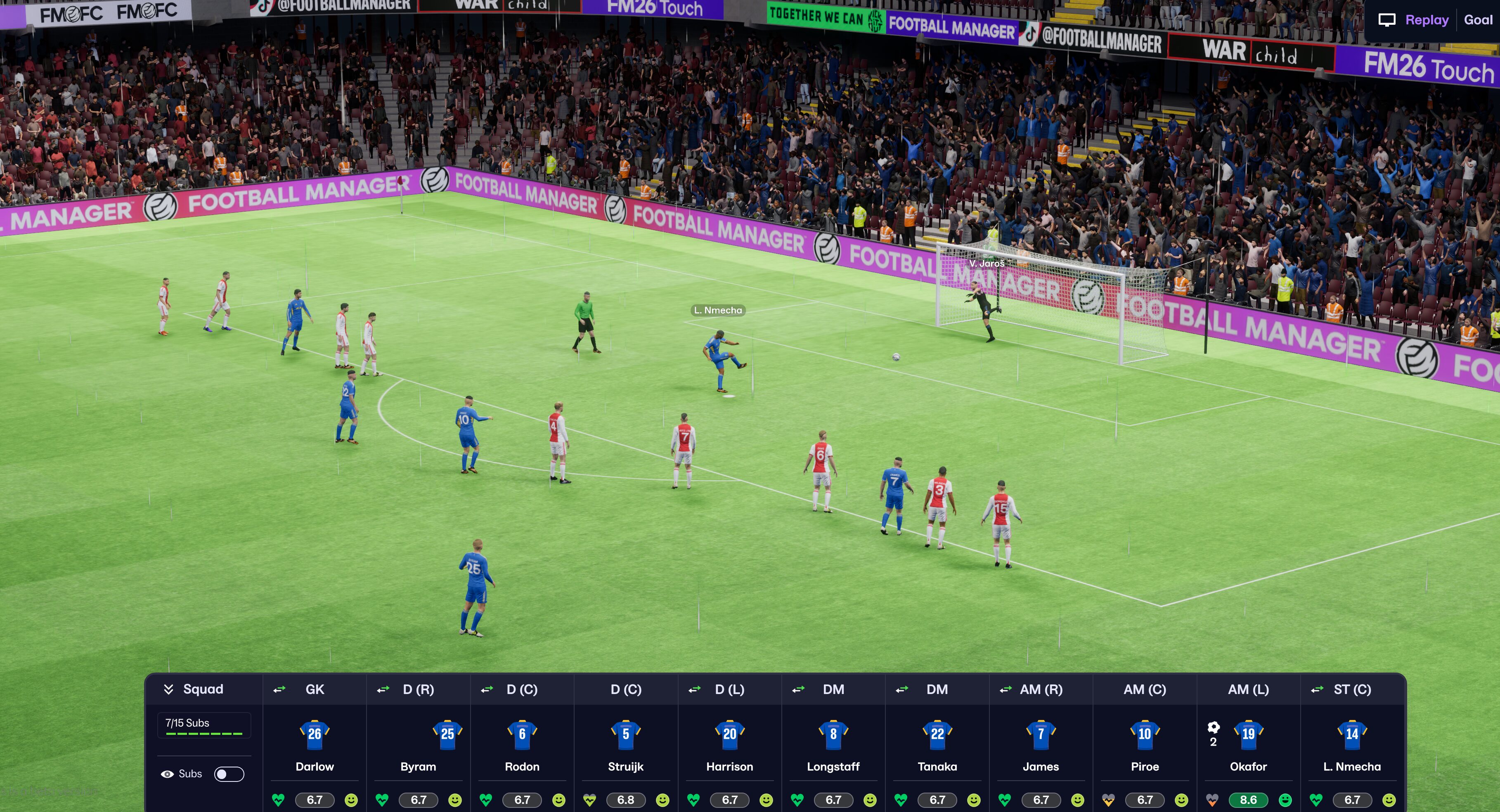
Touchline interactions have been expanded slightly. You can now issue real-time instructions to individual players without pausing the game, such as telling a winger to stay wider or a striker to press more aggressively via a change of role or access to their specific instructions. These micro-adjustments can be the difference between a draw and a win, especially in tight matches, although they are in many ways just a shortcut to screens that have always been available.
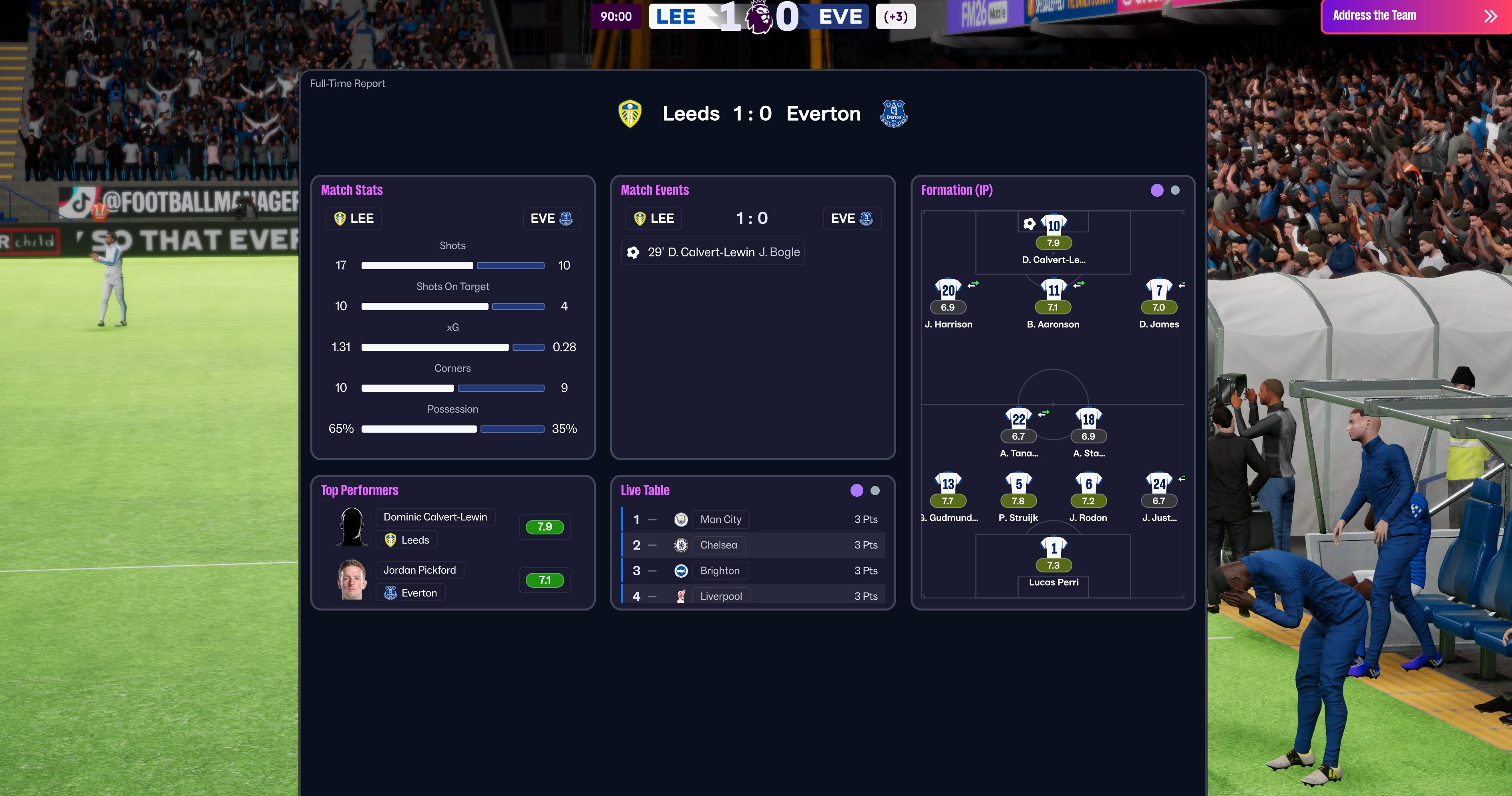
The matchday UI has been streamlined, with collapsible panels, customizable widgets, and better integration of data. You can now pin key stats — like xG, pass completion, or heat maps to your screen, and toggle between tactical views with a single click. In its default setting, it was fine for me, but I can see the potential for certain armchair managers to access an overwhelming array of stats.
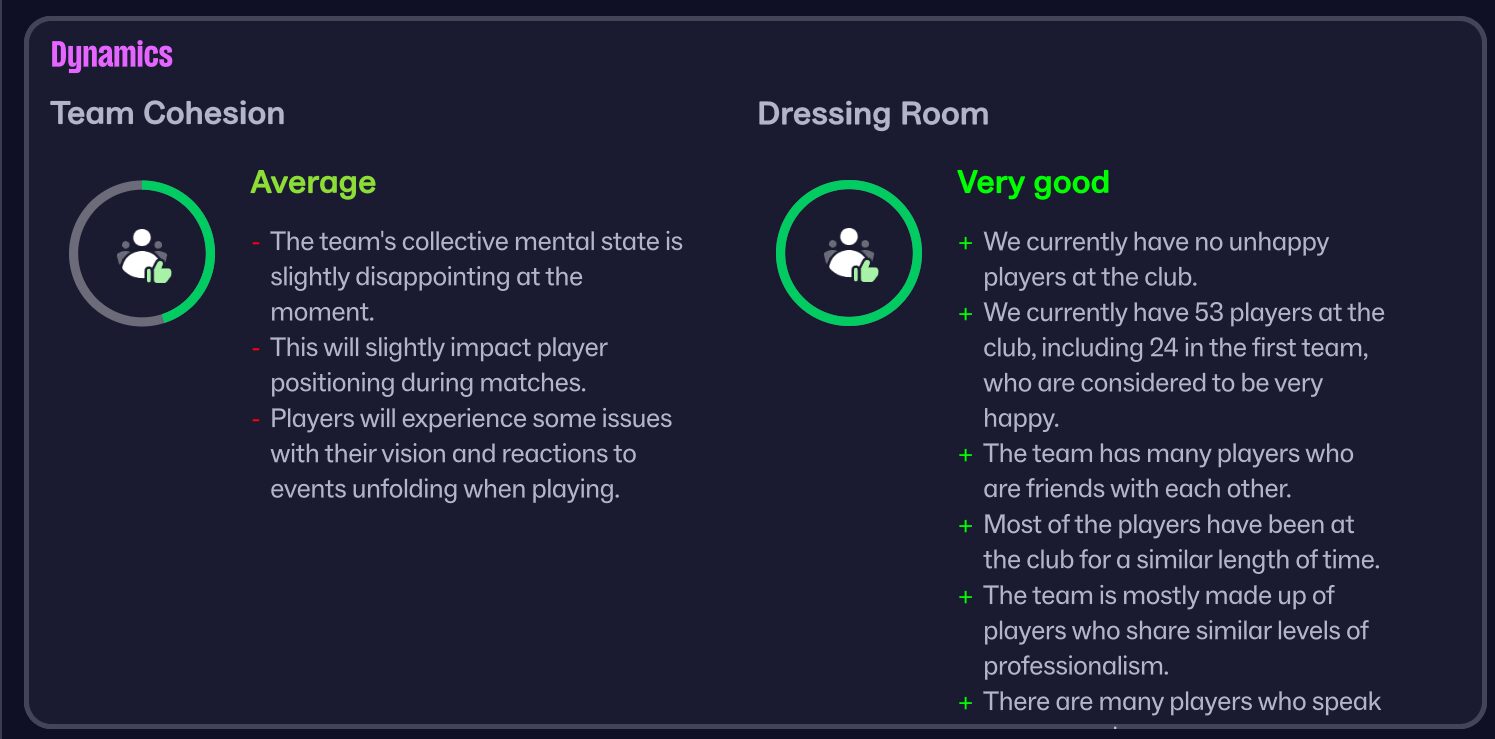
One of the most welcome changes in Football Manager 2026 is the revamped backroom staff system. You now have more granular control over staff responsibilities, with clearer role definitions and better communication. The new Staff Dynamics screen shows how well your assistants, coaches, and analysts work together, and highlights potential conflicts or redundancies.
You can still assign custom delegation profiles, allowing you to offload specific tasks — like training, scouting, or press conferences based on your preferences. Want to focus purely on tactics and transfers? Let your assistant handle morale and media. Prefer a hands-on approach? Dive into every detail. The game adapts to your style as it always has, but I would say again, this is more about how this is presented and not actually something new and different.
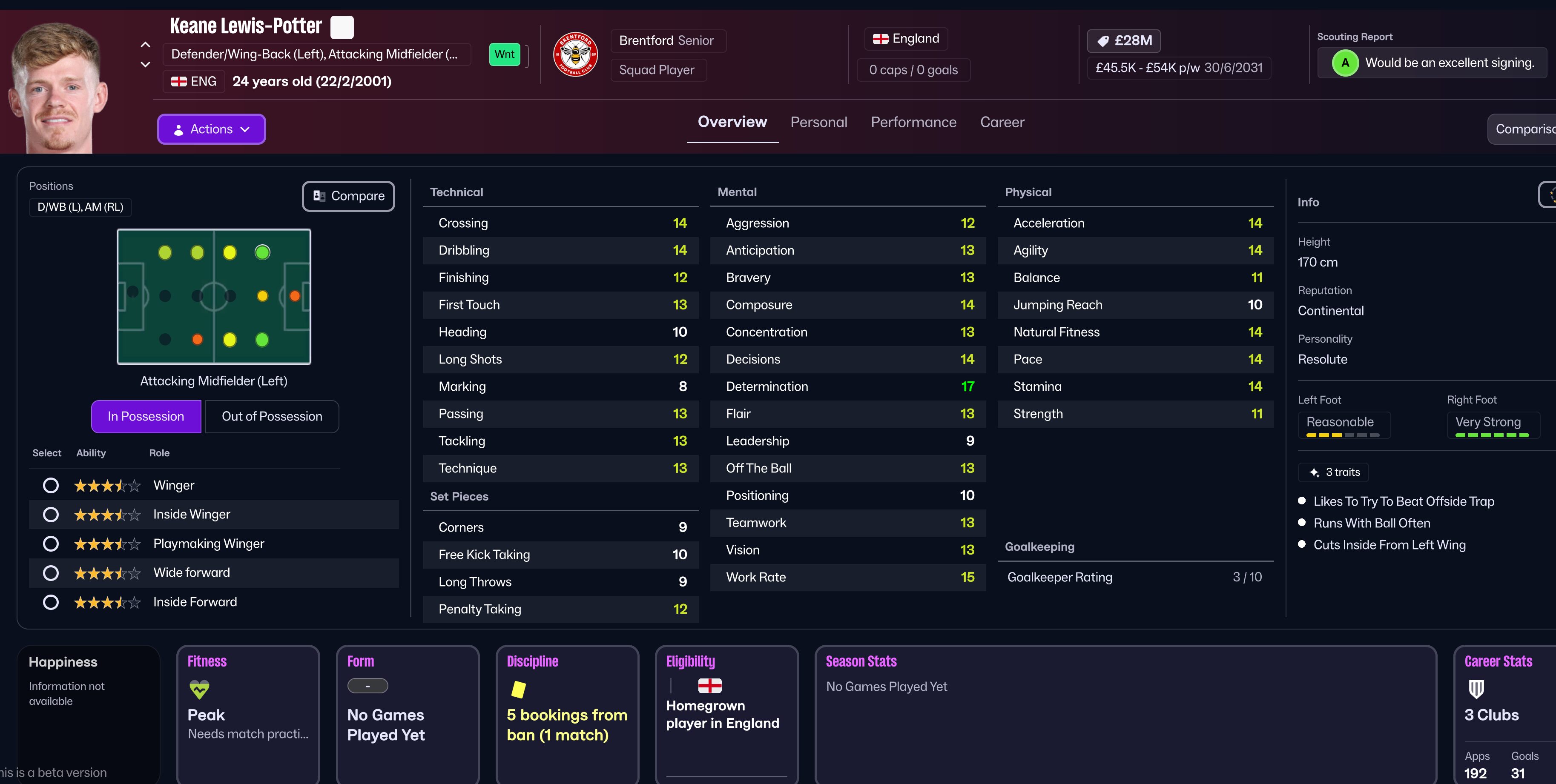
Scouting has been overhauled with the introduction of the global scouting network, which simulates real-world scouting hierarchies. You can now assign scouts to regional hubs, who then feed information to national scouts and eventually to your head scout. This creates a more realistic flow of information and encourages long-term planning. In this area, I will admit that I long for simpler times — it’s now quite difficult to configure views that work, and quick access to information is not always as easy as it was. More realistic; yes. More fun; not necessarily. That said, FM26 wonderkids tend to reflect the real world more, at least, those built into the system for live.
Transfer negotiations have also been expanded in a similar way. Agents now play a more active role, offering players proactively or demanding clauses like release fees, loyalty bonuses, or minimum playing time guarantees, and often requiring consultation before a negotiation begins. These interactions feel more organic and reflect the complexities of modern football deals.
Football Manager 2026 places a greater emphasis on youth development, with a new player pathway system that tracks a youngster’s journey from academy to first team. You can now set development plans that include loan spells, mentoring groups, and tailored training regimes. The game tracks progress over time, showing how decisions — like playing time or position changes — impact growth. This is good, because I’ve always felt that these features were hidden in the past.
Similarly, youth intake has been made more transparent. You’ll receive scouting reports on upcoming academy players months in advance, allowing you to plan contracts and squad space accordingly. The new Academy Director role helps manage this pipeline, offering advice on which players to prioritize and how to structure your youth teams.
The Club Vision system has been expanded to include multi-year objectives, such as qualify for Europe within three seasons or develop five homegrown players. These goals evolve based on performance, and the board is now more reactive — praising overachievement or adjusting expectations after a poor run. I still think that this is largely pointless, as attempting to debate the Vision with your chairman always has — and still does — fall on completely deaf ears.
Board meetings are slightly more interactive, with dynamic agendas that reflect current events. You might be asked to justify a controversial signing, explain a tactical shift, or respond to fan unrest. These conversations feel a tiny bit more natural and impactful, and your relationship with the board now affects contract negotiations, budget flexibility, and job security. In the past, I would almost never interact with the board at all, in Football Manager 2026 I do so infrequently, but that’s better than never.
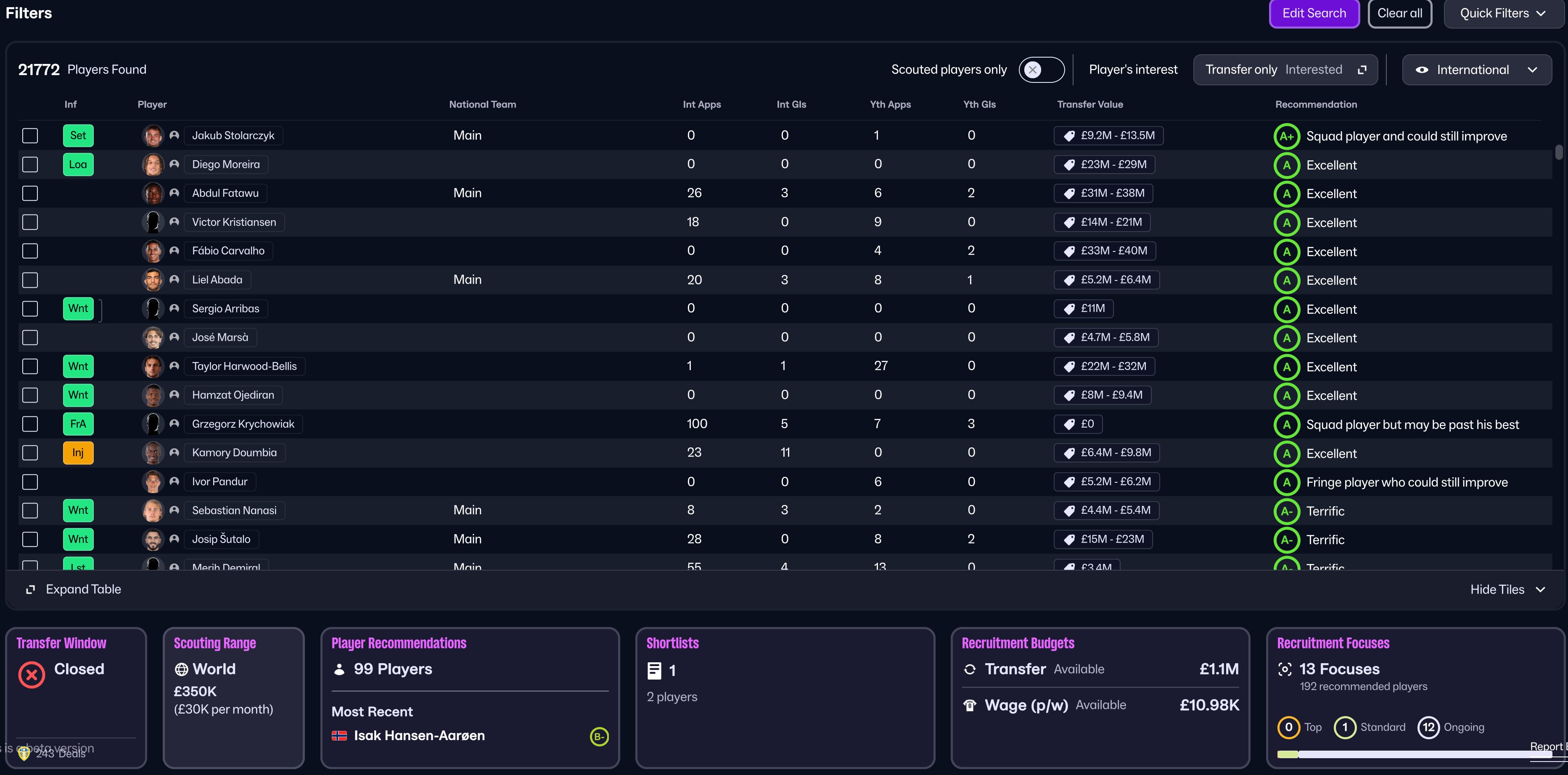
Fan interactions and confidence has also been expanded, and Football Manager 2026 develops a system that tracks supporter sentiment across multiple dimensions — results, transfers, playing style, and youth development. A new Fan Liaison Officer provides regular updates, and you’ll receive feedback from supporter groups after key matches or decisions.
Media interactions return and whilst there’s some improvement in the questions, answers and consequences, this is absolutely the same pointless makework that it always has been — at least in my opinion. I don’t like them, and more often than not I just click any answer from the positive, neutral or negative options without really reading them — knowing that the outcome will be broadly the same. I’d really like to see a big overhaul to this system, or perhaps I should just opt out of it (which is an option).
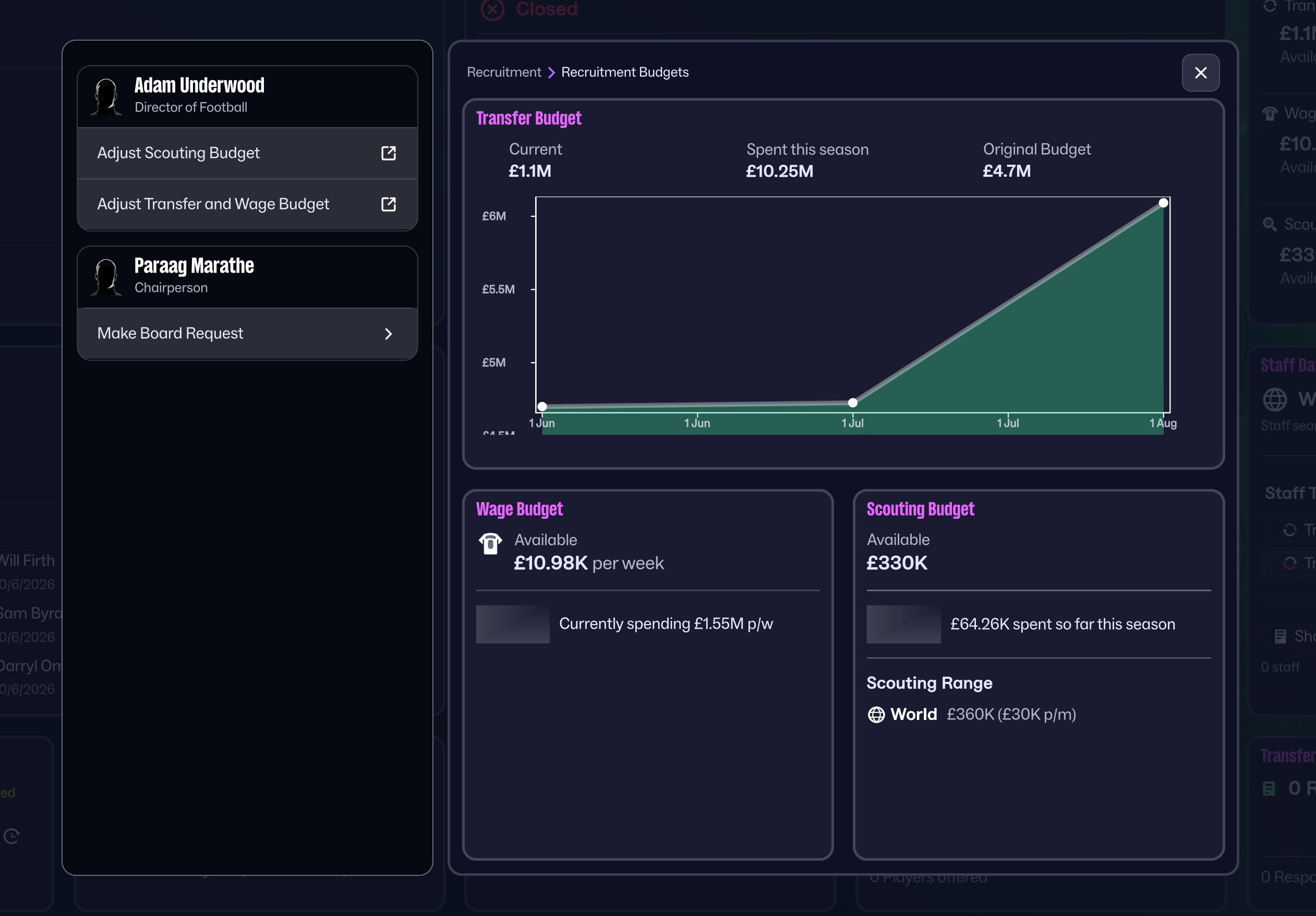
One thing I do like is the new data system, which has been expanded with more granular metrics, including expected threat (xT), progressive passes, and defensive actions per 90. You can now create custom dashboards for different staff roles — analysts, coaches, scouts — and share insights across departments. As I said earlier about the in match info, this is more useful for the real “XG Nerds” out there, but even with a basic understanding of data and a lot of FM experience, it’s a useful suite of new information.
It includes a host of accessibility features, including colorblind modes, text scaling, and narrated menus. The tutorial system has been rebuilt with interactive tooltips, guided scenarios, and video explainers, making it easier than ever for new players to learn the ropes. I’d also say that broadly, the game has been simplified in a few areas that make the tutorial easier to work through thanks to considerably less flannel.
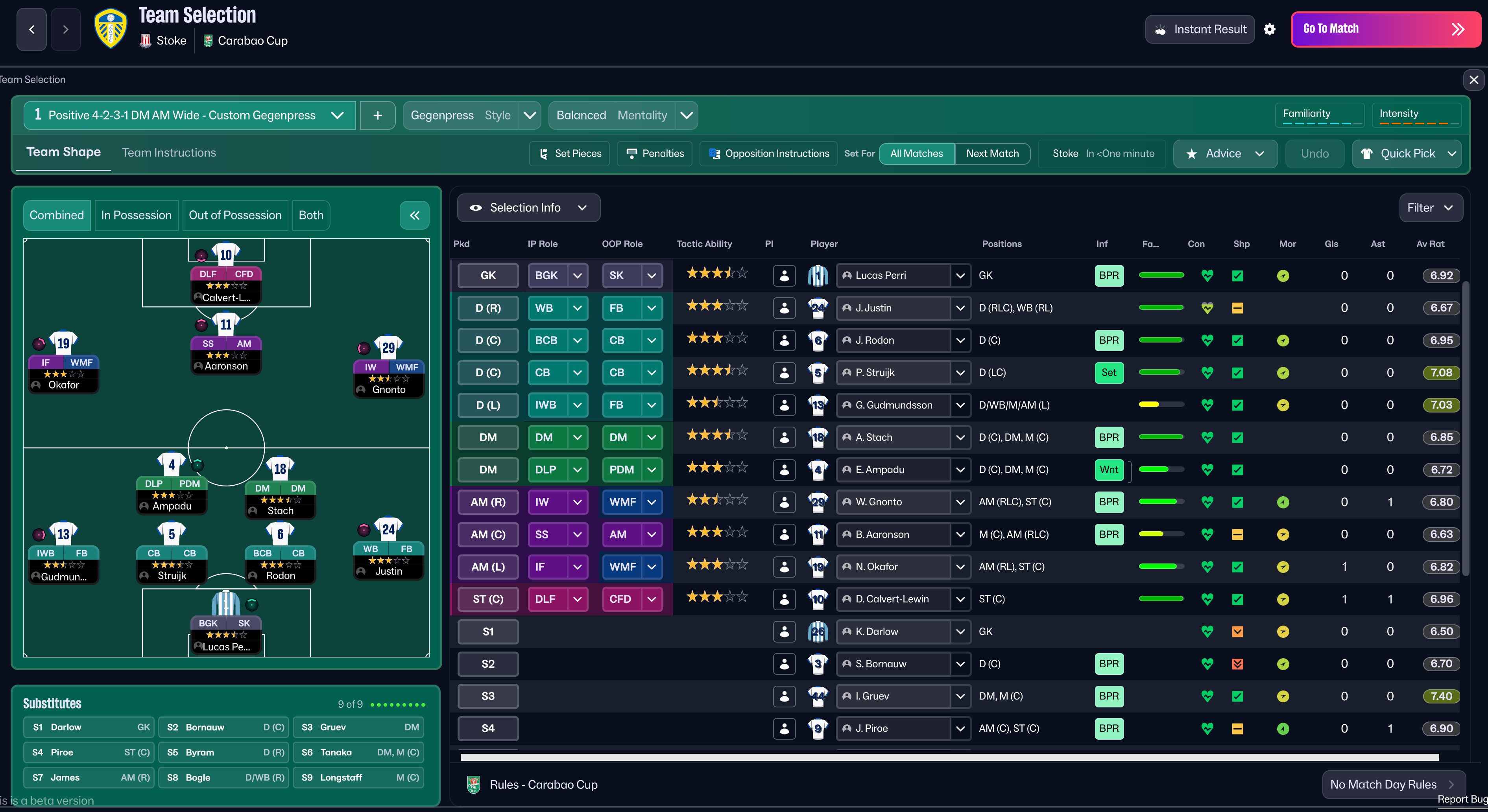
Football Manager 2026 really wants you to believe that it’s a complete reinvention, but I don’t see it like that. There are some huge new technical features — such as the Unity based match engine (which is a massive improvement) and the inclusion of women’s football (which is an important and groundbreaking inclusion.) But the core game that sits beneath it, to me, feels largely the same.
The tactical setup has been improved through the addition of the new tactical features, and there are subtle and minor tweaks to almost every mechanical feature in the game, but each and every one is still recognisable to returning fans. Everything is presented in a new and more modern way, with data screens in the thousands and all the stats that the modern fans seem to demand.
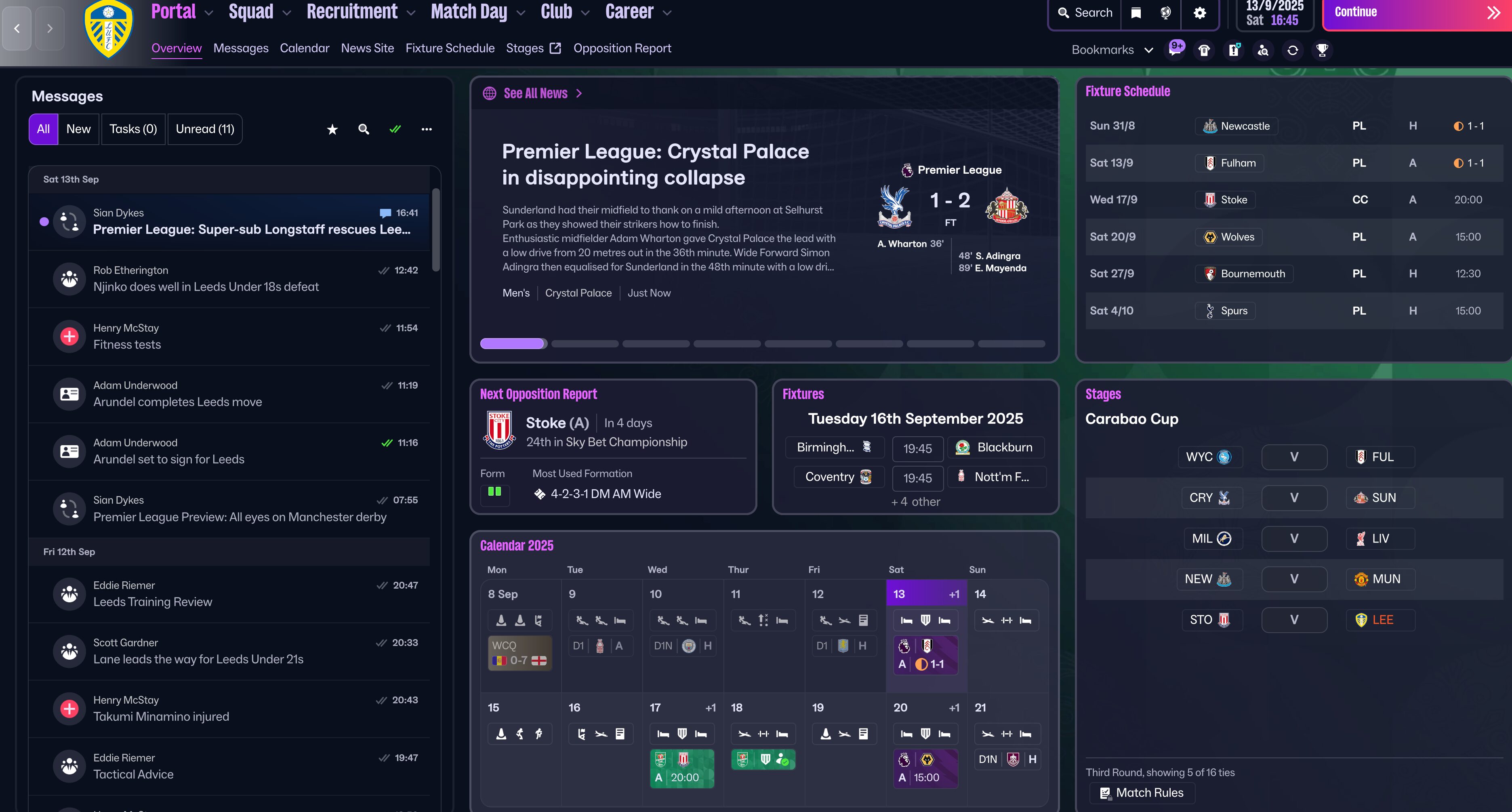
That said, menus like the main “Portal” (which replaces your inbox) are now so filled with periphery and irrelevant messages that you’ll want to skip through that the data becomes overwhelming at times.
Still, whether you’re guiding a non-league club to glory or managing egos at a European giant like Leeds United, Football Manager 2026 offers a sandbox of stories, strategies, and surprises. This is still much more than a game — it’s a complete lifestyle choice, and one that I am generally glad to see returning with a fresh lick of paint and more than a few new tricks up its sleeve.
Football Manager 2026 is available from November 4th for PC & Consoles.
