

Dorfromantik begins with a single hex tile placed in the middle of an empty table, and from that moment the game invites you into a rhythm that is both relaxing and absorbing.
There’s no rush, no pressure beyond the gentle tug of the in-game task system and so players are free to enjoy the steady pleasure of watching a landscape take shape as you and your group decide where each new tile belongs. Dorfromantik is a board game that understands how best to make a cooperative board game, with constant investment from all players and a shared responsibility to push things forwards.
The core gameplay is disarmingly simple. Each turn you draw a hex tile and place it adjacent to your growing countryside, trying to match terrain types — forests, fields, rivers, villages and railways — to score points and complete tasks. These tasks are the engine that drives the game forward: a forest might require exactly five trees, a village might demand a cluster of at least six houses, or a railway or river might need to stretch across a certain length. Completing a task (which will be printed on a tile) earns you a new one, giving players a new focal point and extending the game to open up fresh scoring opportunities. Run out of tiles and the session ends, but that’s OK, because if you do well, you’ll unlock new secrets from within the box.
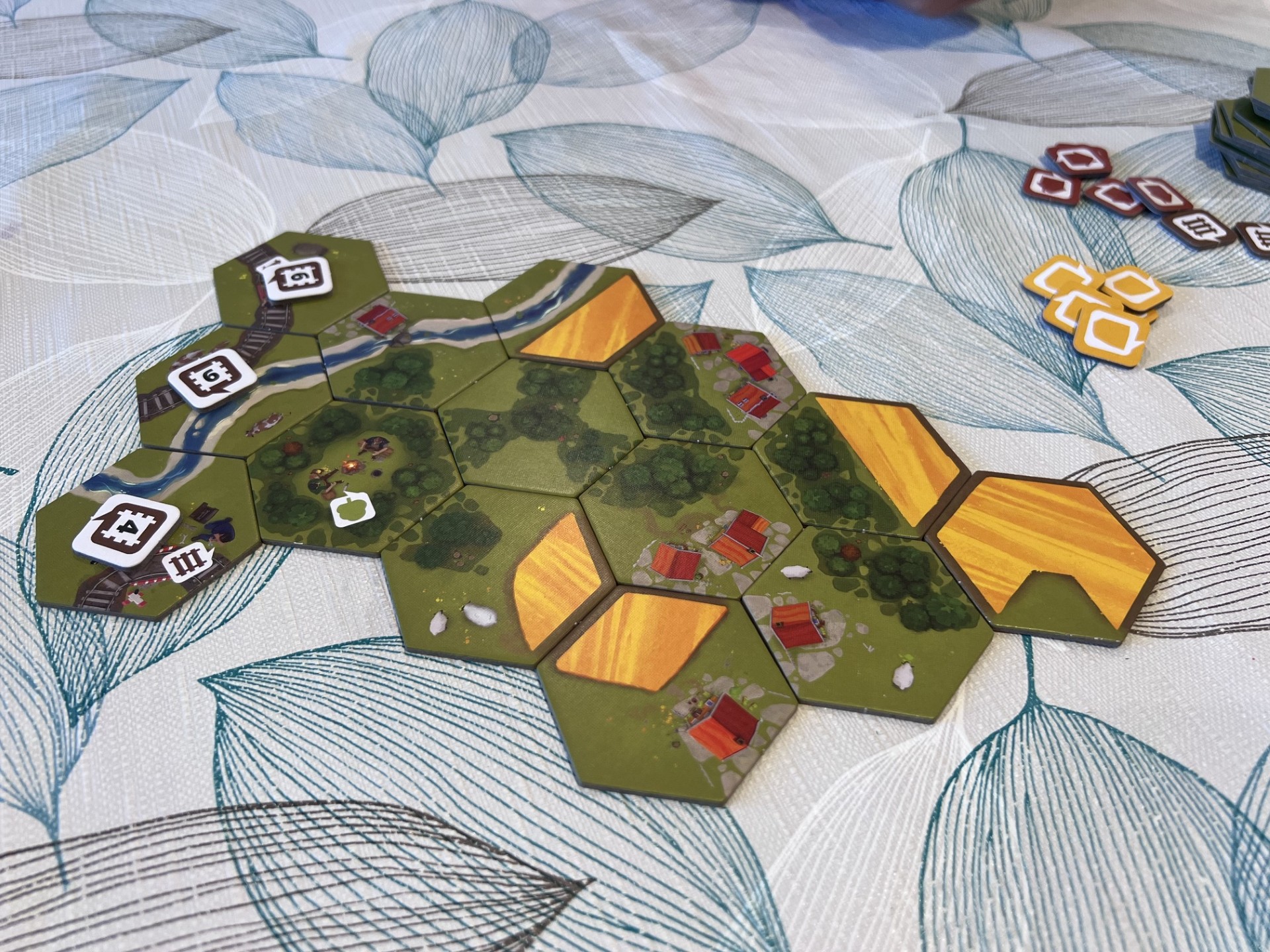
What makes Dorfromantik compelling is the way it balances freedom with constraint. You can place tiles almost anywhere, but optimal placement requires foresight. Rivers need room to bend back on themselves or run away from other tile groups, railways need long corridors to stretch into, and forests and fields need careful shaping to hit precise task numbers without overshooting. The puzzle is never punishing, but it’s always present. Every tile offers a small decision with potential for long‑term consequences, and Dorfromantik rewards players who can think ahead without losing sight of the immediate task at hand.
The cooperative structure enhances this sense of shared problem‑solving. Although only one player places a tile at a time, the game naturally encourages discussion. You’ll find yourself debating whether to extend a river or leave space for a future loop, whether to commit to a sprawling village or keep options open, or how to avoid boxing in a railway. It’s a collaborative puzzle where everyone contributes, and because there’s no conflict either directly or implied, it’s ideal for families, mixed groups or players who prefer thoughtful cooperation over competitive tension. The shared satisfaction of watching the landscape grow — and the collective groan when a tile doesn’t quite fit — is all part of the experience.
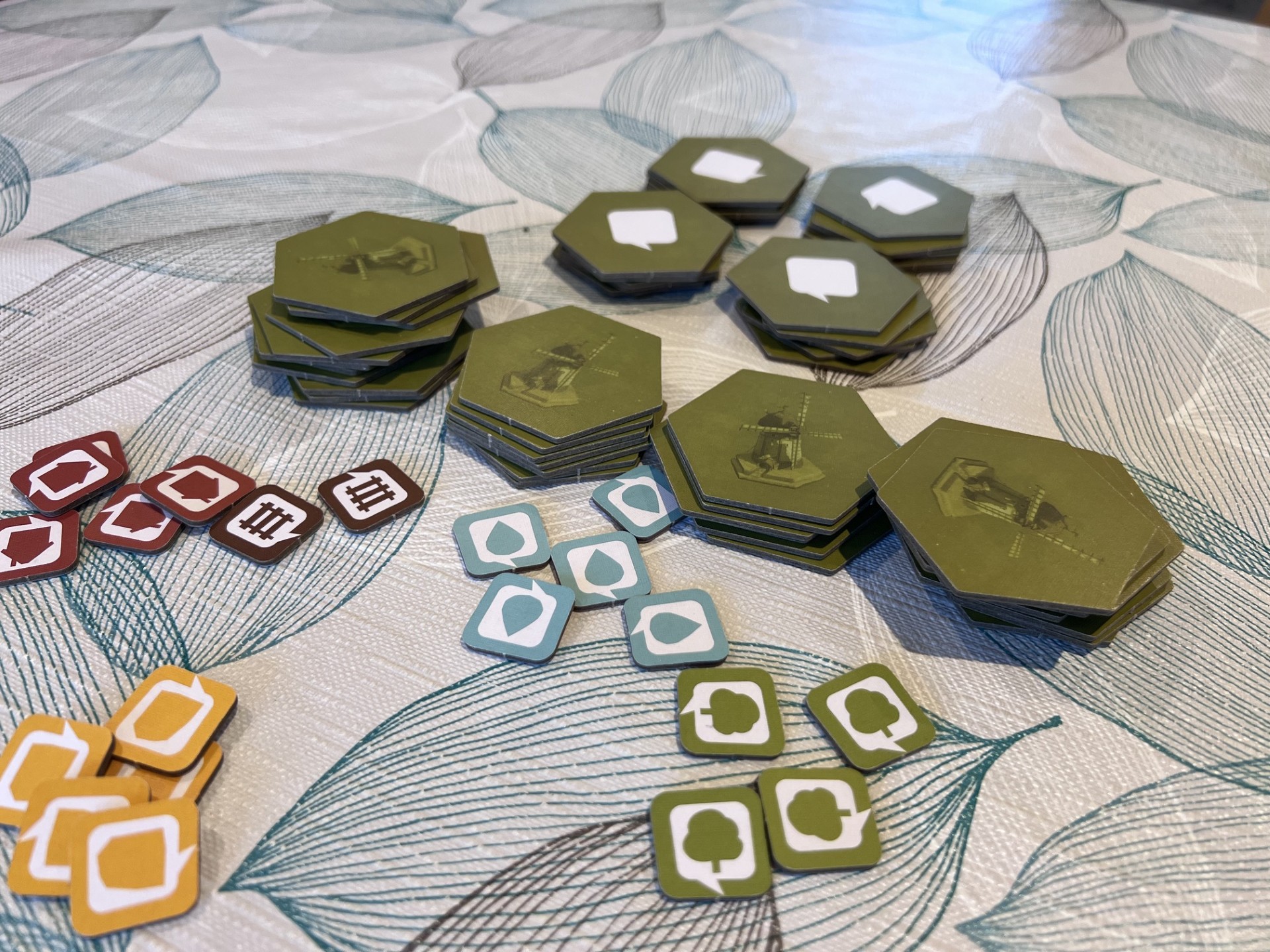
Component quality is excellent. The tiles are thick, durable and printed with warm, inviting artwork that conveys a lovely, pastoral tone. The iconography is clear, the task tokens are easy to manage, and the overall presentation is clean and uncluttered. The physicality of placing tiles to build the landscape elevates the experience, and watching your landscape expand across the table, with rivers curling through fields and railways threading between villages, is deeply satisfying. By the end of a session, you’ll often find yourself admiring the countryside you’ve created as much as the score you achieved, and my kids love naming the emerging villages as we play.
The campaign system adds welcome longevity. As you play, you unlock new tiles, new task types and new scoring challenges that gradually expand the game’s complexity. Dorfromantik offers very gentle progression that never overwhelms, but it keeps the experience fresh across multiple sessions. The campaign also gives the game a sense of continuity: each play feels like part of a larger journey, and the incremental rewards (tracked on a clever campaign sheet) encourage you to return to the table. It’s a clever way to add depth without compromising the game’s accessibility.
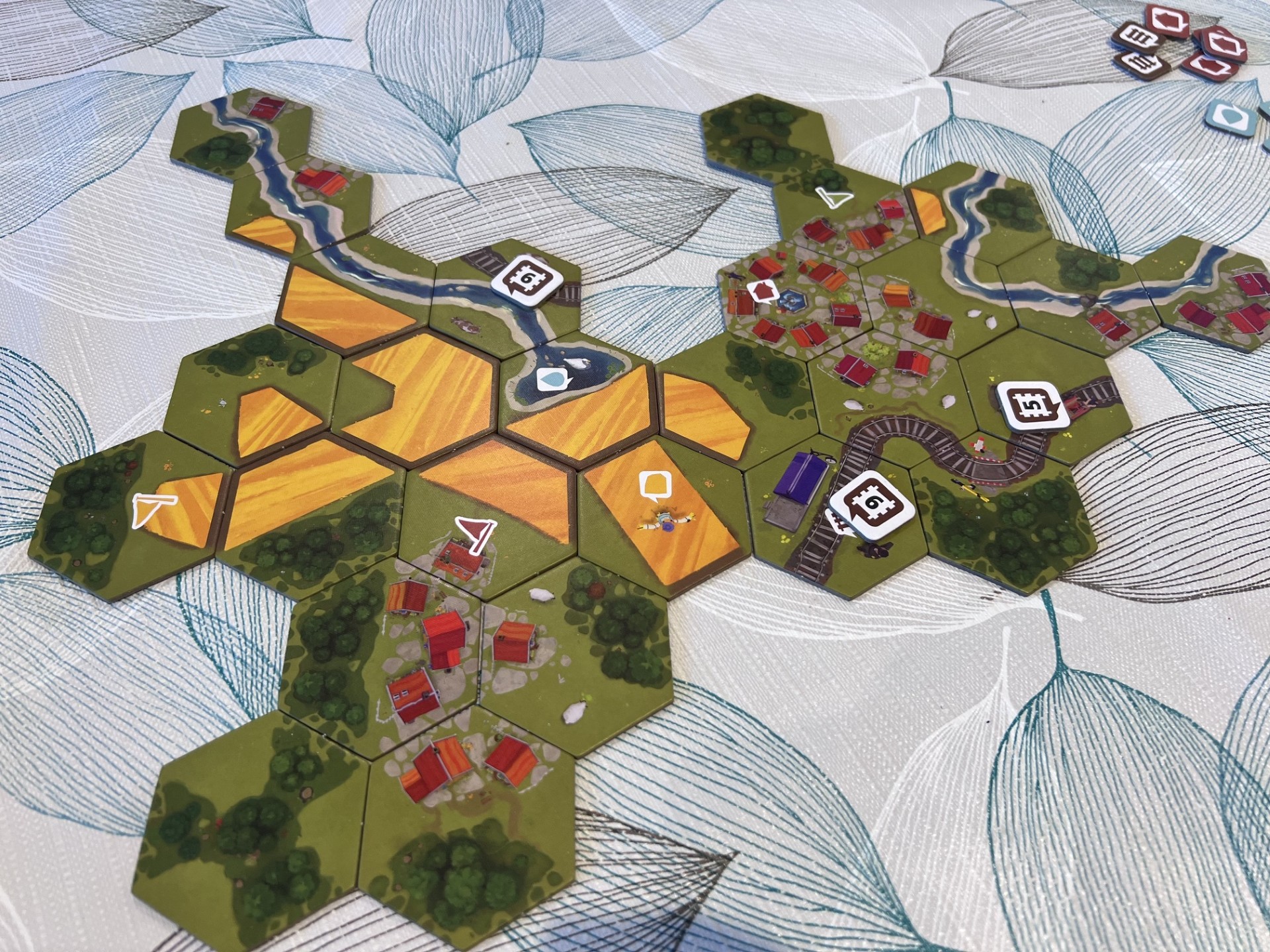
Strategically, it rewards careful planning and spatial awareness. Early in a game, it’s often wise to keep your landscape flexible: avoid sealing off rivers too early, leave room for railways to expand, and build forests and fields in ways that allow for both small and large tasks. Midgame is where the puzzle tightens — you’ll need to commit to certain configurations, balancing the need to complete tasks quickly with the desire to set up high‑value placements.
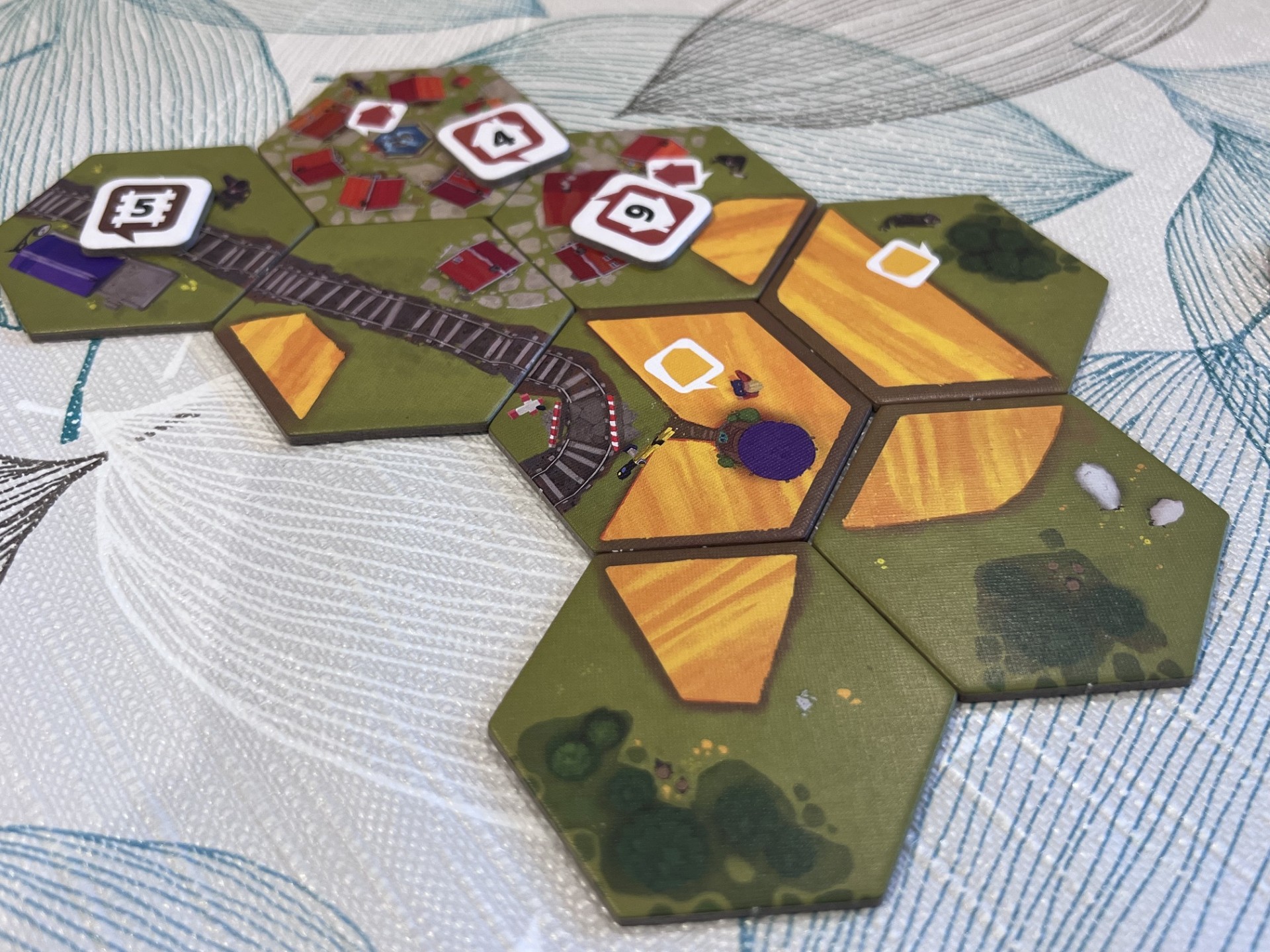
Dorfromantik doesn’t allow players to score a task tile that is placed in a landscape that already exceeds its value, so players who would hope to drop a “three” value task into an existing four or five size forest to score it immediately are scuppered. This means that the endgame becomes a race against your dwindling tile supply and you need to complete the last few tasks, so the best players are those who can squeeze maximum value from imperfect draws. It never feels harsh, but it does reward thoughtful play.
If it has weaknesses, they stem from its gentle nature. Players who crave high tension, direct conflict or deep asymmetry may find it too serene. The puzzle is engaging, but it is not complex in the way heavier euros are; it’s a game about optimisation and aesthetics rather than competition. Some groups may also find that quarterbacking (where one player tries to dominate every decision) can occur if not managed, though the cooperative structure generally encourages shared input.
That said, these are minor concerns in a design that is so confident in its identity. Dorfromantik isn’t trying to be a heavy strategy game or a dramatic narrative experience. It is a meditative, collaborative puzzle that invites players to slow down, think carefully and enjoy the process of creation. It’s a game that feels good to play — calm, thoughtful and rewarding — and it leaves you with something beautiful at the end of every session.
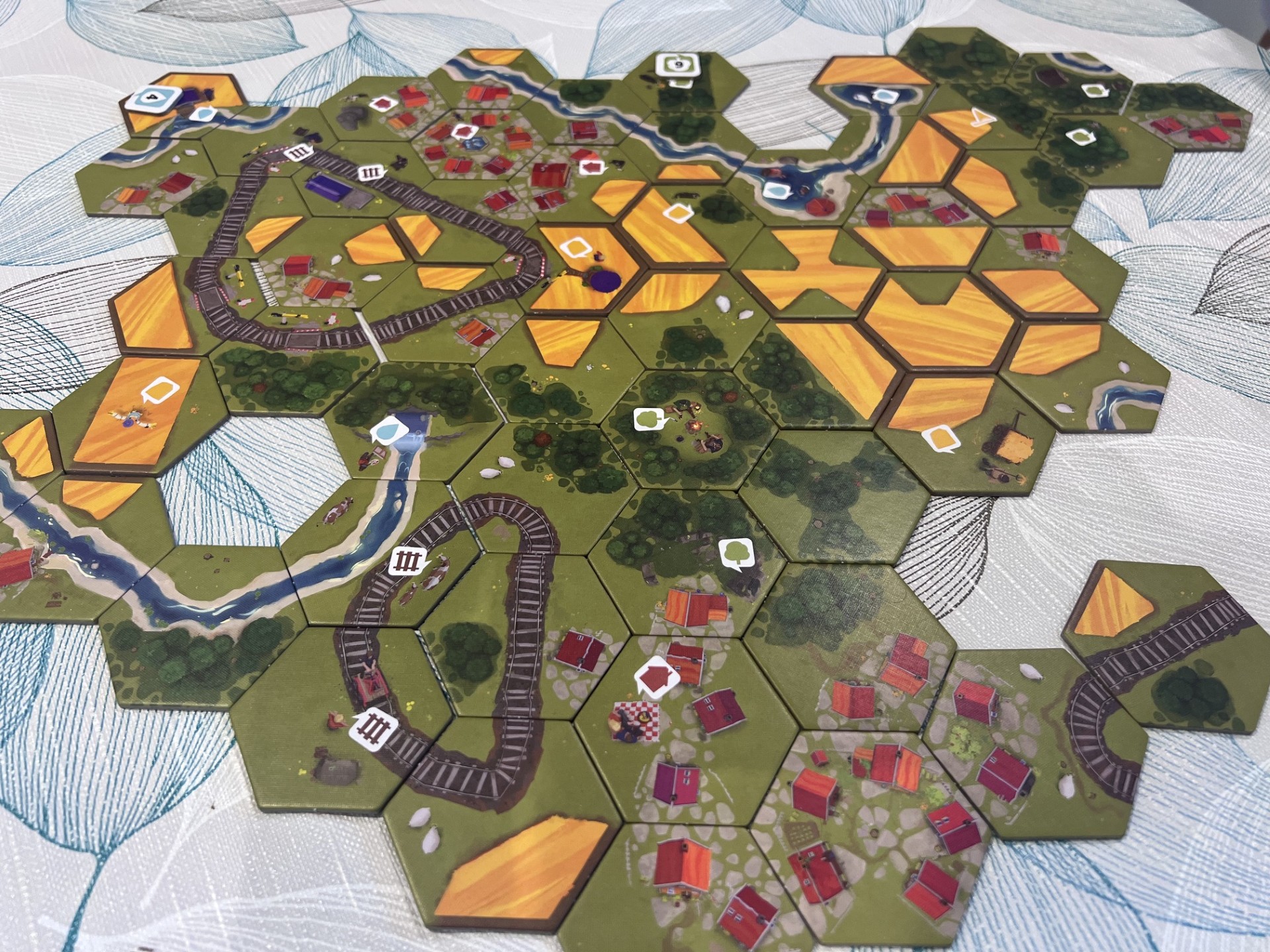
In the end, Dorfromantik succeeds because it offers a tactile, social experience that feels both familiar and new. It rewards planning without punishing mistakes, encourages cooperation without pressure, and offers a sense of accomplishment that comes as much from the landscape you build as from the score you achieve. For groups who enjoy gentle puzzles, collaborative play and games that are as pleasant to look at as they are to think about, Dorfromantik is a delight — a warm, inviting countryside you’ll be happy to return to again and again.
Dorfromantik is available now, including from Amazon.
