

Station to Station was a precision-placement puzzle game with the appearance of a management sim. I adored the fresh take on making an infrastructure game more cerebral, but for the sequel Town to City the devs at Galaxy Grove have committed to the genre and delivered a more in-depth and free-form building / management experience. Thankfully, the management aspects remain accessible and the voxel graphics are as beautiful as ever, keeping the soul of Station to Station while pushing the gameplay further into City Builder territory.
Town to City opens on a wide-open landscape with nought but a station. As Mayor of this new town you are in charge of researching new buildings, providing homes for people arriving by train and looking after a thriving population. There’s nothing as dramatic as illness or death, instead you have to manage happiness levels to make sure your population doesn’t choose to simply get back on the train and leave. It’s all the nitty-gritty of a city-builder without the pressure of “simulation” style consequences.
If you’re a seasoned Cities Skylines player or want to stare at economy charts, Town to City isn’t really going to scratch that itch. Instead, it focuses on giving you a sandbox-style creation tool with plenty of developmental and numerical objectives to meet alongside it. If you’re new to City Builders or want some more heart and soul in what is traditionally a harsh genre, Town to City was made for you.
The vibes are immaculate, Mr. Mayor
Before you even house your first residents, the landscape and music pulls you into the world. While the camera showcases the first arriving train, your ears are blessed with Fable-esque swinging rhythms and french blues horns, a tinkling of ivories breaking through for the main melody.
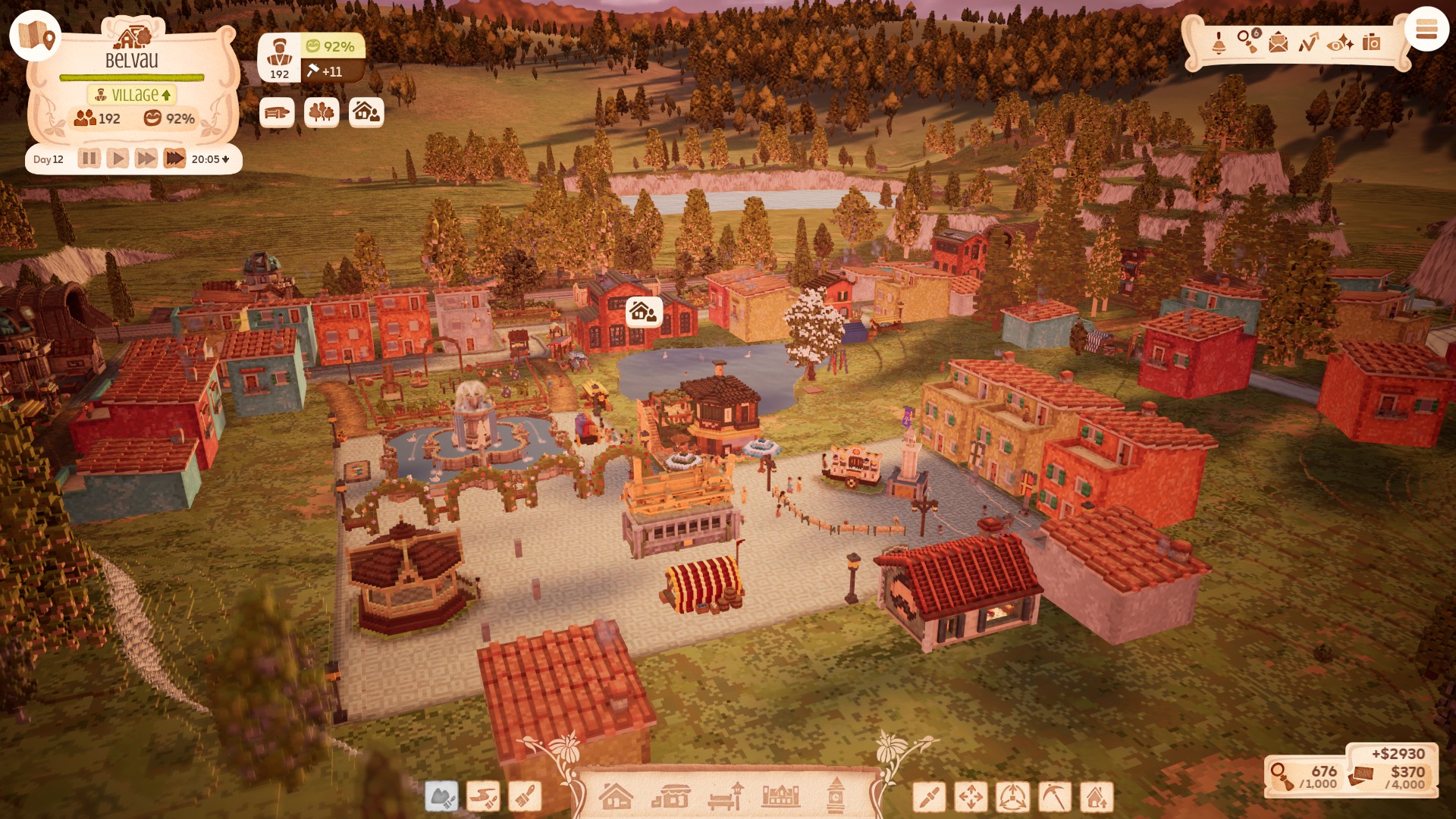
Before long you’re placing houses (which can be painted a variety of colours right off the bat), benches, planters, street lights and roads. Even at this early stage, I can imagine towns immediately looking different. One early lightbulb moment I had was to use the road tool to build a large 8 x 8 square of Plaza road. Buildings and decorations can be placed on roads without it messing with your pathing, so this meant I could have market stalls, fountains and the like all on top of the plaza square rather than being forced to have them awkwardly cling to the edges of the space.
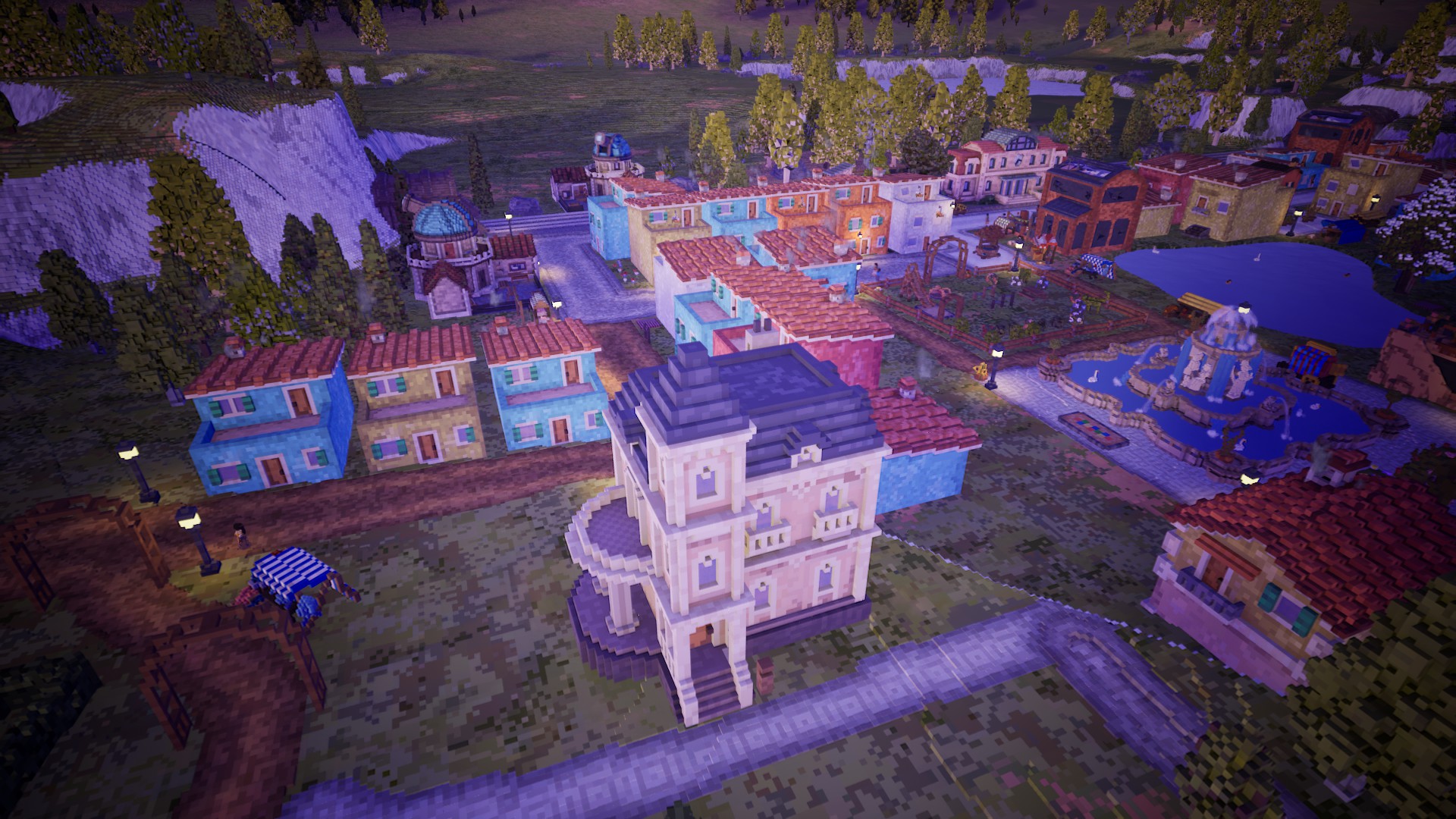
That philosophy of player choice permeates through the whole experience, with customisable buildings, relatively free-form placement and even terraforming tools later on. As space became an issue I used terraforming to smooth the side of one nearby cliff, then drew a dirt path ascending the new slope. On the top I plonked one of my newly researched buildings: A Chapel.
Diverse building types and research opportunities
The basic necessities for a quaint French town are all here: Houses, shoe-makers, clothiers, bistros and chapels. It’s all distinctly national and all oozes character. To earn research points and unlock a myriad of even more diverse decorations and upgrades you need to assign workers to your research station. With their huge observatory building and swirling gyroscope these buildings keep you unlocking both required upgrades and optional extras at a steady rate.
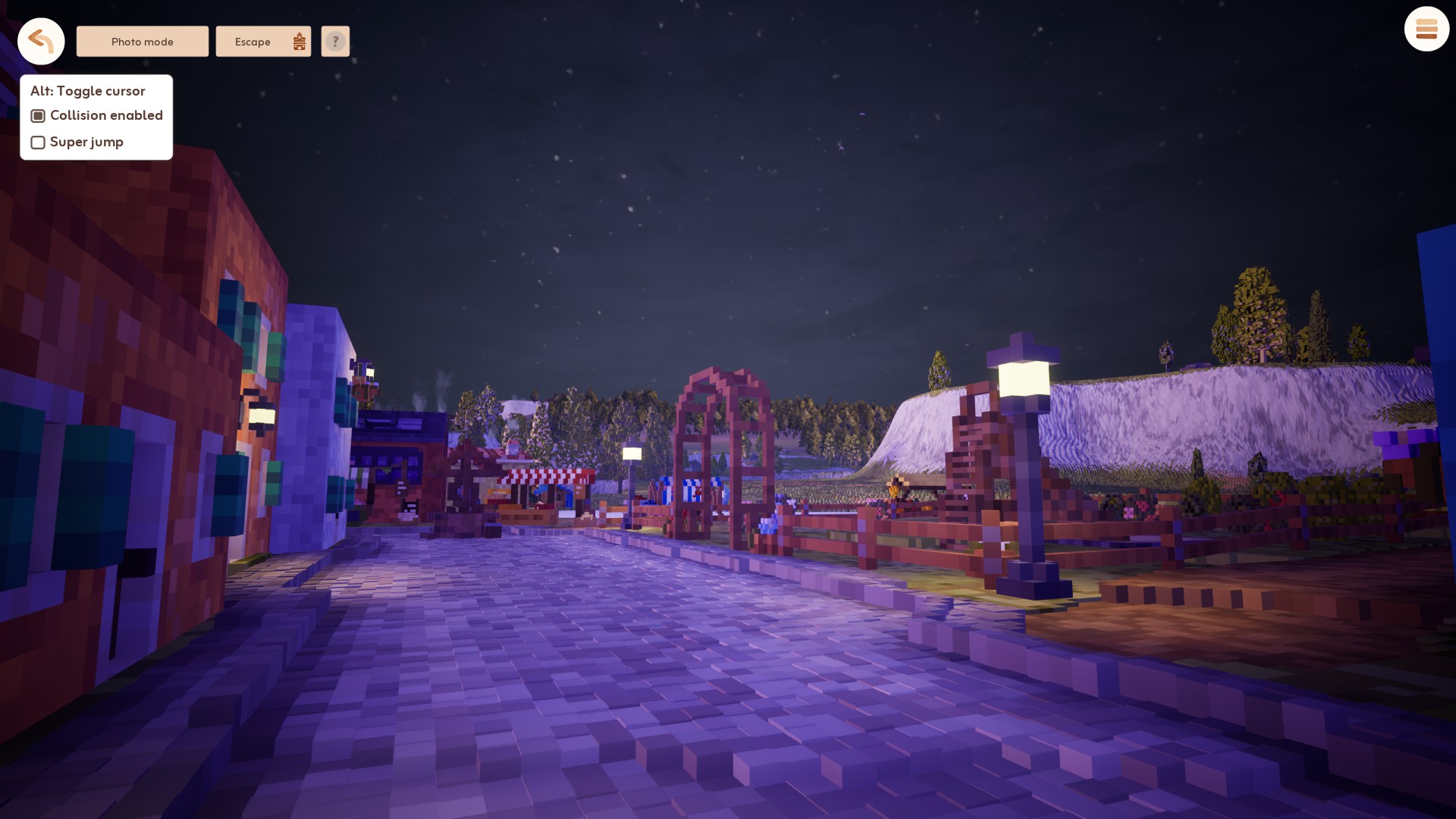
In fact, the progression is laid out in a “money isn’t worth anything if you don’t spend it” way. It can be tempting to hoard in a game where you know you’ll have to invest big at breakpoints. However, by having a cap on research points and treasury funds, Town to City encourages you to be constantly spending, progressing and creating.
I might not have built a little park area, adorned the streets in hanging flower pots, or even placed street lamps on every corner had I not been close to my money cap and thought “Well, I need to spend it anyway”. This no-pressure way of incentivising creativity and investment is a devilishly brilliant bit of game design and it made sure I really cared about the hundreds of available decorative items.
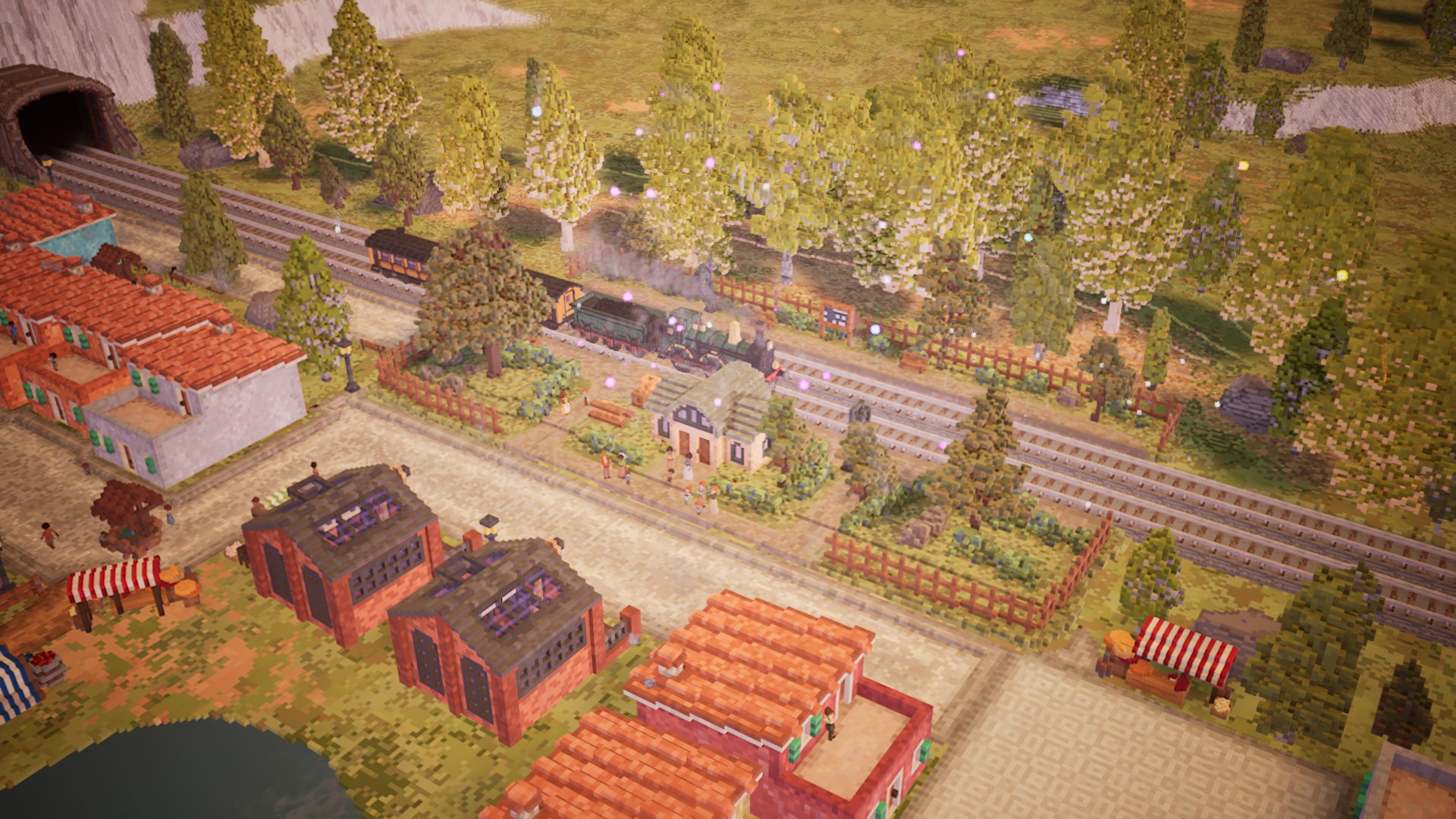
These buildings and items aren’t just cosmetic, of course, and as you progress you’ll want to make sure the fancy plazas and “up-market” parts of town have suitable decoration, food supply, entertainment and light.
Requests directly from living residents
As the Mayor, you have a suggestions box! When your new town’s inhabitants have requests of their loving mayor, they’ll send you a letter. Sometimes these have pre-set requirements such as making sure the poor lass has access to a clothing store (blue is just so last year), while others will allow a bit more freedom.
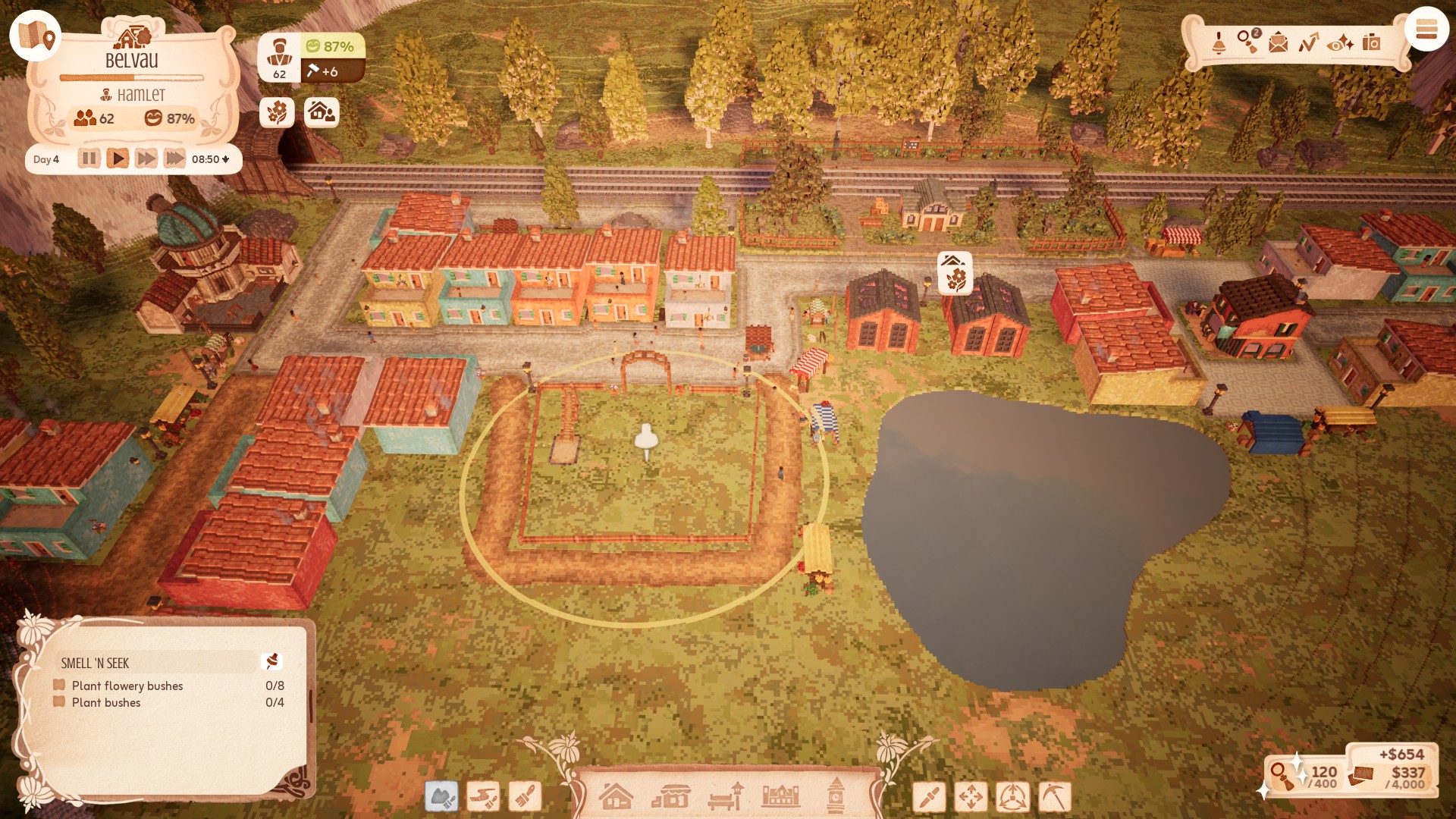
I’d already designed a little park space in my town early on, and much later a request came through from a kid who wanted somewhere to play hide and seek! I could drop the pin for the quest location where I wanted, so chose my park. This little bit of player agency really helped make the town feel like mine, and feel alive. It’s also a smart way to force players to expand rather than just line buildings up in a static grid-like arrangement.
At every turn, Town to City wants you to be creating, investing and enjoying the process.
Optional extra mechanics for more management depth
You can happily sit in the first area for hours and hours, but there are two other regions to explore as well. Completing the first few requirements in each area unlocks a new mechanic across all regions, deepening your options for gameplay and creation. One area adds farming, making things like supply speeds and worker placement much more important. The final area adds tourism, which can be used to make that final push from Town to City.
As much depth as you choose, with very little pressure to play any one way
Just like Station to Station appeared like it might be an infrastructure sim but was actually a puzzle game, Town to City appears like it might be a full-on management game but is actually more like a sandbox. Different players will of course interact with the game differently, and there are plenty of traditional management mechanics and economy screens there later on. But, for me, I was glad to be able to see my town grow, meet its residents and feel completely free to spend the money I’d earnt on silly little projects: Building a carnival square, making a cliff-top church community and building a hedge maze…
Town to City is available now on PC
